10:23 pm, Friday, 26 December 2025

Asif Nazrul: Human rights must be cultivated as a culture

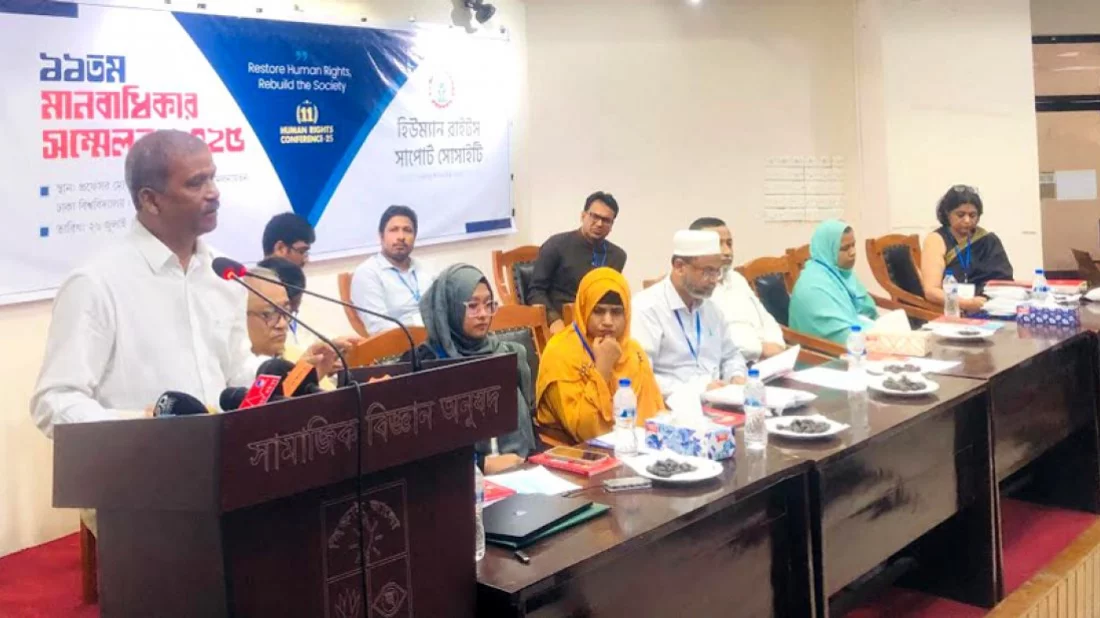
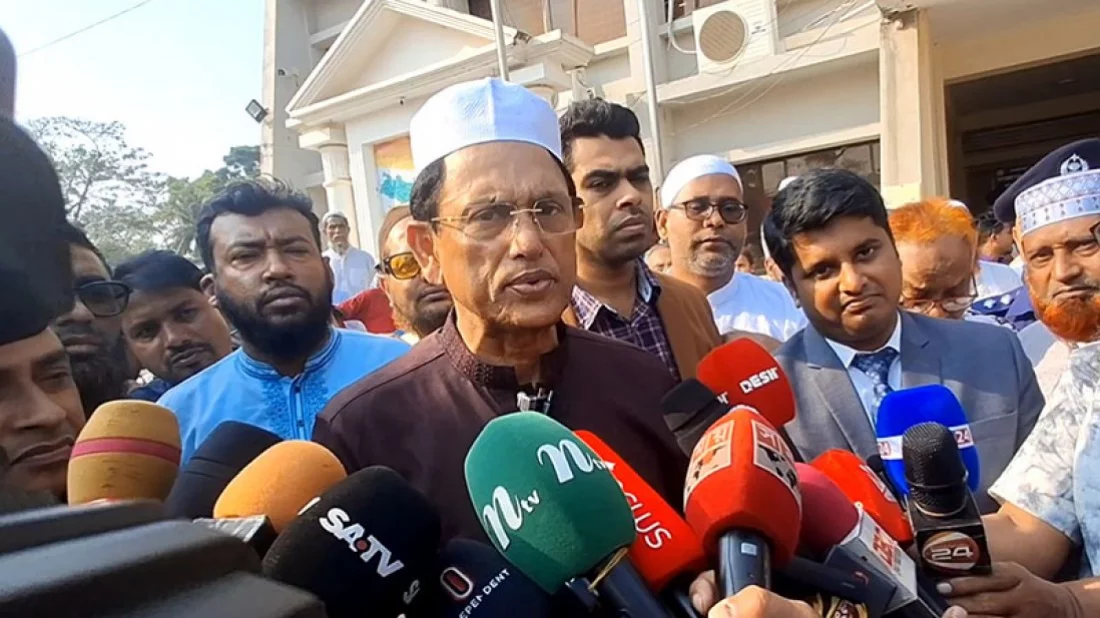
Asif Nazrul, law adviser of the interim government, said that human rights must be cultivated as a culture and that laws alone won’t suffice; it requires everyone’s realization.

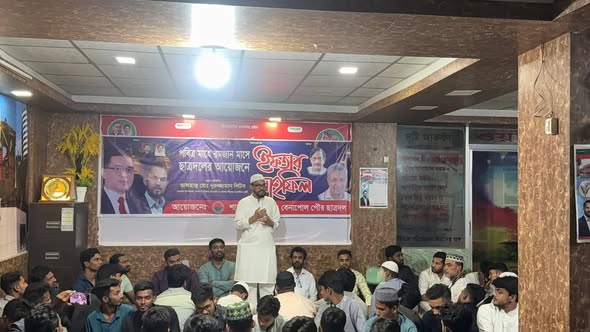
He made these remarks on Saturday at the ‘11th Human Rights Conference–2025,’ organized by the Human Rights Support Society at the Mozaffar Ahmed Chowdhury Auditorium of the University of Dhaka (DU).

During the event, Asif Nazrul said: “Every university of ours needs transparency. We must engage in self-criticism and self-purification. When these efforts align with legal and institutional reform, real transformation can occur.”

Emphasizing the need for reform in the state’s three main branches—executive, legislative, and judiciary—he said: “First, the problems in these three sectors must be solved. Creating an Information Commission, a Human Rights Commission, or hosting seminars and symposiums while ignoring the real issues will yield no benefit. The root problem must be addressed.”

He described the establishment of human rights as a major challenge: “Many believe that human rights have been realized in Europe or America. They have done so within their own countries—but globally, they are deeply engaged in violating human rights.”

Nazrul added: “When the fear of losing power disappears, governments can turn monstrous, we have seen this in the fascist regime of the Awami League. That era cost over a thousand student lives. Thousands more were left permanently crippled. We paid a terrible, horrifying price, something we must internalize as part of our collective consciousness. We must remain hopeful, but we should not become utopian.”

During the seminar, family members of victims spoke, including relatives of Ahmed bin Kashem and Michael Chakma, both disappeared under the Awami regime; two wounded fighters of the July uprising; and the mothers of Naima Sultana and Shahriyar Khan, who were martyred during the uprising.

Speaking of his experience, Michael Chakma said: “After I was abducted, my family, human rights activists, and many others searched for me in different places. Eventually, my family broke down mentally. My father was devastated and passed away. At one point, my family performed my funeral rites. How hopeless must a family be to carry out the last rites while their loved one is still missing? I was freed from that state—but the question still remains: what will the future of Bangladesh look like?”

Tag :

Write Your Comment

Your email address will not be published. Required fields are marked *

Save Your Email and Others Information

About Author Information

Asif Nazrul: Human rights must be cultivated as a culture

Update Time : 09:26:35 pm, Saturday, 26 July 2025

Asif Nazrul, law adviser of the interim government, said that human rights must be cultivated as a culture and that laws alone won’t suffice; it requires everyone’s realization.

He made these remarks on Saturday at the ‘11th Human Rights Conference–2025,’ organized by the Human Rights Support Society at the Mozaffar Ahmed Chowdhury Auditorium of the University of Dhaka (DU).

During the event, Asif Nazrul said: “Every university of ours needs transparency. We must engage in self-criticism and self-purification. When these efforts align with legal and institutional reform, real transformation can occur.”

Emphasizing the need for reform in the state’s three main branches—executive, legislative, and judiciary—he said: “First, the problems in these three sectors must be solved. Creating an Information Commission, a Human Rights Commission, or hosting seminars and symposiums while ignoring the real issues will yield no benefit. The root problem must be addressed.”

He described the establishment of human rights as a major challenge: “Many believe that human rights have been realized in Europe or America. They have done so within their own countries—but globally, they are deeply engaged in violating human rights.”

Nazrul added: “When the fear of losing power disappears, governments can turn monstrous, we have seen this in the fascist regime of the Awami League. That era cost over a thousand student lives. Thousands more were left permanently crippled. We paid a terrible, horrifying price, something we must internalize as part of our collective consciousness. We must remain hopeful, but we should not become utopian.”

During the seminar, family members of victims spoke, including relatives of Ahmed bin Kashem and Michael Chakma, both disappeared under the Awami regime; two wounded fighters of the July uprising; and the mothers of Naima Sultana and Shahriyar Khan, who were martyred during the uprising.

Speaking of his experience, Michael Chakma said: “After I was abducted, my family, human rights activists, and many others searched for me in different places. Eventually, my family broke down mentally. My father was devastated and passed away. At one point, my family performed my funeral rites. How hopeless must a family be to carry out the last rites while their loved one is still missing? I was freed from that state—but the question still remains: what will the future of Bangladesh look like?”