Reporter Name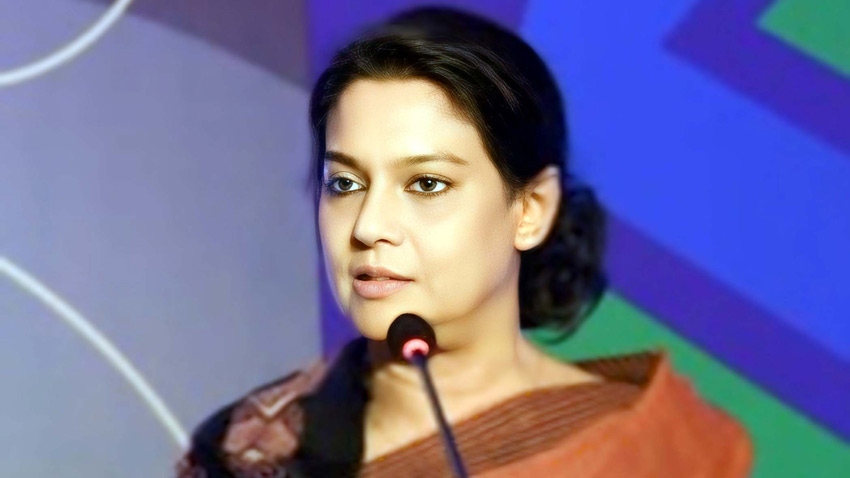
Environment Adviser Syeda Rizwana Hasan has said she is not aware of any directive to remove President Mohammed Shahabuddin’s portrait from Bangladesh’s diplomatic missions abroad, stressing that a single photograph cannot have any connection to elections.
Speaking to reporters at the Secretariat on Sunday (August 17), Rizwana Hasan said, “I cannot comment on the context of this. But it is clear that this has nothing to do with elections. A photograph has no relation to elections whatsoever.”
She reiterated that the government has already announced elections will be held in February, and the Election Commission has been instructed to make preparations accordingly. “That is the government’s position,” she added.
Earlier, Bangladesh’s Ministry of Foreign Affairs instructed several ambassadors and high commissioners via telephone to remove President Shahabuddin’s portraits from embassies, consulates, and diplomats’ offices and residences. No formal circular or email was issued, but those informed were asked to convey the directive to other missions in their regions, according to diplomatic sources.
The directive, issued on August 15, was confirmed by multiple sources from Bangladesh’s missions abroad.
When asked about stone looting incident, Syeda Rizwana Hasan has alleged that administrative collusion was involved in the incident.
“The administration was certainly complicit. Otherwise, how could they now suddenly discover where the stones had gone? Their earlier silence also shows that perhaps they were unwilling to take risks,” she said.
She clarified that her ministry was not directly responsible for monitoring how much stone was extracted or looted. “As an environmental activist and government adviser, I will take responsibility for my role, but do not place the blame for looting itself on me,” she added.
Rizwana Hasan noted that although cases were being filed, it was important to see whether the real culprits were being properly listed.
Recounting recent events, she said that when she and another adviser visited the site, they faced attacks. “Only after we left did a massive three-day drive take place, during which power supplies to stone-crushing machines were cut off. Yet within four to five days, all political parties came together to pressure for stone extraction to resume. Transport owners even threatened strikes. This is not new—when stone extraction was halted in 2020 during the COVID-19 crisis, they called strikes twice, prioritizing business interests over public suffering.”
She accused vested quarters of using “all-party unity” to create pressure, which in turn encouraged administrative complicity.
“Today, however, people have shown their strength. When ordinary citizens rise against looters, no matter how powerful the political support behind them, the people’s power will prevail,” Rizwana Hasan declared.
She thanked citizens for their strong protests, saying: “This situation will make looters think twice before attempting such theft again in the future.