10:34 am, Wednesday, 18 February 2026

Foreign diplomats, UN agencies, political leaders visit Rohingya camps

  • Reporter Name
  • Update Time : 08:58:19 pm, Tuesday, 26 August 2025
  • 117 Time View

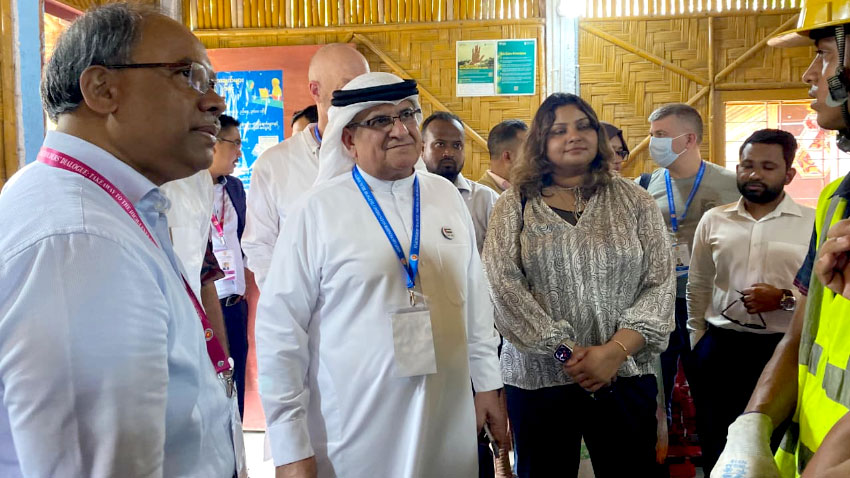
On the final day of the three-day international stakeholders’ dialogue on the Rohingya crisis, foreign diplomats, representatives of UN agencies and international organizations, along with Bangladeshi political leaders, visited Rohingya camps in Cox’s Bazar’s Ukhiya on Tuesday.

The delegation assessed the refugees’ living conditions, healthcare services, education, food distribution and other humanitarian activities.

They toured World Food Programme (WFP) distribution points, hospitals, and a UNHCR-supported sanitary napkin production facility, before speaking directly with Rohingya families about their challenges and hopes for the future.

Deputy Press Secretary to the Chief Adviser, Abul Kalam Azad Majumder, told BSS that participants were taken to the Rohingya camps to gain a close understanding of the ground realities.

“The government and the people of Bangladesh have stood beside the Rohingyas on humanitarian grounds. However, if international funding ceases, these camps would face a catastrophic humanitarian disaster. Thus, we are urging donor countries and agencies to continue their support,” he said.

He further warned that if the crisis prolongs, it could have a negative impact not only on Bangladesh but also on regional peace and security.

Programme Policy Officer of the World Food Programme in Cox’s Bazar Sheikh Robiul Alam said that with existing funds, food assistance could be maintained until December.

“But no new funding commitments have yet been received, which has already emerged as a matter of concern. Without new financing, vital humanitarian activities like food supply may come to a halt,” he cautioned.

The presence of political party representatives added further significance to the camp visit.

The political leaders noted that the Rohingya crisis is not the responsibility of any single government but a matter of national consensus.
Earlier, representatives from 10 political parties, including BNP, Jamaat-e-Islami and NCP, took part in the stakeholders’ dialogue where they said active involvement of all parties can strengthen Bangladesh’s position on the global stage.

Foreign diplomats and international agencies representatives praised Bangladesh’s extraordinary role in addressing the Rohingya crisis, describing it as a global humanitarian challenge.

They observed that the coordinated and effective efforts by the international community for the safe and sustainable return of the Rohingyas are now the demands of time.

The Office of the High Representative for the Rohingya Issue and the Ministry of Foreign Affairs jointly organized the three-day event titled “Stakeholders’ Dialogue: Takeaway to the High-Level Conference on the Rohingya Situation” at Hotel Baywatch here with the aim of engaging global stakeholders to find out solutions to the protracted Rohingya crisis.

The dialogue that brought together government officials, representatives from UN agencies, international and regional organizations, diplomats and political leaders turned the coastal district, which hosts over a million Rohingyas, into an important hub of global humanitarian diplomacy.

The dialogue that started on Sunday concluded today with the visit to the Rohingya camps. According to the organizers, the recommendations from the Cox’s Bazar dialogue will be presented at the upcoming UN high-level conference on the Rohingya issue in New York on 30 September this year. It is expected that the global diplomatic platform would provide new directions toward resolving the crisis.


Tag :

Write Your Comment

Your email address will not be published. Required fields are marked *

Save Your Email and Others Information

About Author Information

Foreign diplomats, UN agencies, political leaders visit Rohingya camps

Update Time : 08:58:19 pm, Tuesday, 26 August 2025

On the final day of the three-day international stakeholders’ dialogue on the Rohingya crisis, foreign diplomats, representatives of UN agencies and international organizations, along with Bangladeshi political leaders, visited Rohingya camps in Cox’s Bazar’s Ukhiya on Tuesday.

The delegation assessed the refugees’ living conditions, healthcare services, education, food distribution and other humanitarian activities.

They toured World Food Programme (WFP) distribution points, hospitals, and a UNHCR-supported sanitary napkin production facility, before speaking directly with Rohingya families about their challenges and hopes for the future.

Deputy Press Secretary to the Chief Adviser, Abul Kalam Azad Majumder, told BSS that participants were taken to the Rohingya camps to gain a close understanding of the ground realities.

“The government and the people of Bangladesh have stood beside the Rohingyas on humanitarian grounds. However, if international funding ceases, these camps would face a catastrophic humanitarian disaster. Thus, we are urging donor countries and agencies to continue their support,” he said.

He further warned that if the crisis prolongs, it could have a negative impact not only on Bangladesh but also on regional peace and security.

Programme Policy Officer of the World Food Programme in Cox’s Bazar Sheikh Robiul Alam said that with existing funds, food assistance could be maintained until December.

“But no new funding commitments have yet been received, which has already emerged as a matter of concern. Without new financing, vital humanitarian activities like food supply may come to a halt,” he cautioned.

The presence of political party representatives added further significance to the camp visit.

The political leaders noted that the Rohingya crisis is not the responsibility of any single government but a matter of national consensus.
Earlier, representatives from 10 political parties, including BNP, Jamaat-e-Islami and NCP, took part in the stakeholders’ dialogue where they said active involvement of all parties can strengthen Bangladesh’s position on the global stage.

Foreign diplomats and international agencies representatives praised Bangladesh’s extraordinary role in addressing the Rohingya crisis, describing it as a global humanitarian challenge.

They observed that the coordinated and effective efforts by the international community for the safe and sustainable return of the Rohingyas are now the demands of time.

The Office of the High Representative for the Rohingya Issue and the Ministry of Foreign Affairs jointly organized the three-day event titled “Stakeholders’ Dialogue: Takeaway to the High-Level Conference on the Rohingya Situation” at Hotel Baywatch here with the aim of engaging global stakeholders to find out solutions to the protracted Rohingya crisis.

The dialogue that brought together government officials, representatives from UN agencies, international and regional organizations, diplomats and political leaders turned the coastal district, which hosts over a million Rohingyas, into an important hub of global humanitarian diplomacy.

The dialogue that started on Sunday concluded today with the visit to the Rohingya camps. According to the organizers, the recommendations from the Cox’s Bazar dialogue will be presented at the upcoming UN high-level conference on the Rohingya issue in New York on 30 September this year. It is expected that the global diplomatic platform would provide new directions toward resolving the crisis.