6:47 am, Wednesday, 3 December 2025

Gulf states unite to respond to Israeli attack on Qatar

  • Reporter Name
  • Update Time : 09:57:19 pm, Saturday, 13 September 2025
  • 31 Time View

For decades, wealthy Gulf Arab states cast themselves as oases of stability in a region mired in conflict, building gleaming capitals with fast-growing economies powered by by millions of foreign workers drawn to economic opportunity and a tax-free lifestyle.

But this year, their sense of safety was shattered when two regional powers conducted a direct strike on a Gulf country for the first time. First, Iran targeted an American airbase in Qatar in June after the US struck its nuclear facilities. Then came Israel’s attack this week, targeting Hamas’ political leadership in Doha.

Gulf Arab states are rattled as a Gaza war that began thousands of miles from their borders nearly two years ago inches closer to home.

With few viable military options to retaliate, Qatar has vowed a “collective” regional response to Israel’s strikes. That response is currently “under consultation and discussion” with other partners, Qatari Prime Minister Sheikh Mohammed bin Abdulrahman Al Thani told CNN’s Becky Anderson on Wednesday. A decision is expected at an Arab and Islamic summit in Doha this weekend.

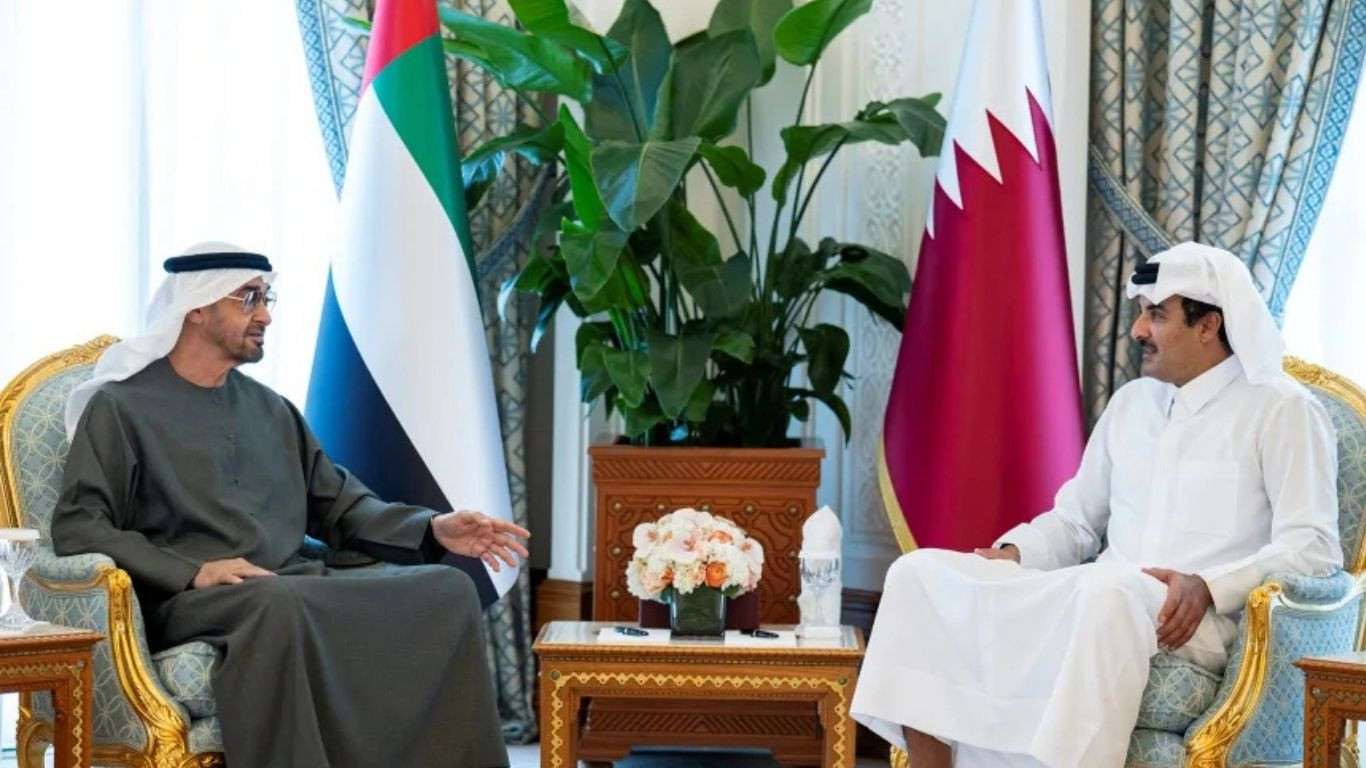
Perhaps the most visible and immediate reaction came from the Gulf state that has the closest ties to Israel: the United Arab Emirates. UAE President Mohammed bin Zayed Al Nahyan arrived in Doha with a large delegation less than 24 hours after the attack. Qatar was his first stop on a Gulf tour to coordinate a response to the attack that also took him to Bahrain and Oman. On Friday, the UAE summoned an Israeli diplomat to denounce what it called Israel’s “blatant and cowardly” attack.

The UAE had been signaling discontent with Israel even before the strike on Doha. This week, Lana Nusseibeh, a senior UAE official, warned that reported Israeli plans to annex parts of the occupied West Bank would be a “red line” that would “betray the very spirit of the Abraham Accords.”

Qatar’s prime minister said that part of Doha’s response would be in the legal arena, including through international law. On Thursday, it successfully lobbied for a unanimous statement at the UN Security Council condemning the Israeli attack.

Hasan Alhasan, senior fellow for Middle East Policy at the International Institute for Strategic Studies in Bahrain, said Gulf states haven’t previously significantly participated in proceedings against Israel at international courts, and that that could change.

“Gulf states so far have not played a key role in supporting these efforts, politically or financially. Gulf states could collectively decide to join those cases,” he said.

Another option is for Qatar to withdraw from its role as the go-to mediator between the US and some of its adversaries, analysts say.

Gulf states have had significant internal quarrels over the years but remain bound by mutual defense treaties signed decades ago.

Abdulaziz Sager, chairman of the Saudi-based Gulf Research Center, said Gulf Arab countries could resort to activating and expanding the “Peninsula Shield Force” – a 1980s-era military pact intended to deter attacks on their nations.

“These clauses have so far been theoretical,” Alhasan said, but “now they could activate them, by creating a unified Gulf command, integrating air and missile defense system, building a more independent ingenious capability.”

Most of the seven Gulf states depend on US military hardware and host American bases, but recent perceived American failures to defend their territories could prompt the Arab nations to diversify their defense capabilities or demand stronger US security guarantees.

Gulf states like Qatar, Saudi Arabia, Kuwait, and the UAE could utilize their vast sovereign wealth funds to impose trade limitations on Israel.

“They could decide to use their funds to boycott companies who have significant stakes in the Israeli economy,” Alhasan said.

Tag :

Write Your Comment

Your email address will not be published. Required fields are marked *

Save Your Email and Others Information

About Author Information

Gulf states unite to respond to Israeli attack on Qatar

Update Time : 09:57:19 pm, Saturday, 13 September 2025

For decades, wealthy Gulf Arab states cast themselves as oases of stability in a region mired in conflict, building gleaming capitals with fast-growing economies powered by by millions of foreign workers drawn to economic opportunity and a tax-free lifestyle.

But this year, their sense of safety was shattered when two regional powers conducted a direct strike on a Gulf country for the first time. First, Iran targeted an American airbase in Qatar in June after the US struck its nuclear facilities. Then came Israel’s attack this week, targeting Hamas’ political leadership in Doha.

Gulf Arab states are rattled as a Gaza war that began thousands of miles from their borders nearly two years ago inches closer to home.

With few viable military options to retaliate, Qatar has vowed a “collective” regional response to Israel’s strikes. That response is currently “under consultation and discussion” with other partners, Qatari Prime Minister Sheikh Mohammed bin Abdulrahman Al Thani told CNN’s Becky Anderson on Wednesday. A decision is expected at an Arab and Islamic summit in Doha this weekend.

Perhaps the most visible and immediate reaction came from the Gulf state that has the closest ties to Israel: the United Arab Emirates. UAE President Mohammed bin Zayed Al Nahyan arrived in Doha with a large delegation less than 24 hours after the attack. Qatar was his first stop on a Gulf tour to coordinate a response to the attack that also took him to Bahrain and Oman. On Friday, the UAE summoned an Israeli diplomat to denounce what it called Israel’s “blatant and cowardly” attack.

The UAE had been signaling discontent with Israel even before the strike on Doha. This week, Lana Nusseibeh, a senior UAE official, warned that reported Israeli plans to annex parts of the occupied West Bank would be a “red line” that would “betray the very spirit of the Abraham Accords.”

Qatar’s prime minister said that part of Doha’s response would be in the legal arena, including through international law. On Thursday, it successfully lobbied for a unanimous statement at the UN Security Council condemning the Israeli attack.

Hasan Alhasan, senior fellow for Middle East Policy at the International Institute for Strategic Studies in Bahrain, said Gulf states haven’t previously significantly participated in proceedings against Israel at international courts, and that that could change.

“Gulf states so far have not played a key role in supporting these efforts, politically or financially. Gulf states could collectively decide to join those cases,” he said.

Another option is for Qatar to withdraw from its role as the go-to mediator between the US and some of its adversaries, analysts say.

Gulf states have had significant internal quarrels over the years but remain bound by mutual defense treaties signed decades ago.

Abdulaziz Sager, chairman of the Saudi-based Gulf Research Center, said Gulf Arab countries could resort to activating and expanding the “Peninsula Shield Force” – a 1980s-era military pact intended to deter attacks on their nations.

“These clauses have so far been theoretical,” Alhasan said, but “now they could activate them, by creating a unified Gulf command, integrating air and missile defense system, building a more independent ingenious capability.”

Most of the seven Gulf states depend on US military hardware and host American bases, but recent perceived American failures to defend their territories could prompt the Arab nations to diversify their defense capabilities or demand stronger US security guarantees.

Gulf states like Qatar, Saudi Arabia, Kuwait, and the UAE could utilize their vast sovereign wealth funds to impose trade limitations on Israel.

“They could decide to use their funds to boycott companies who have significant stakes in the Israeli economy,” Alhasan said.