2:53 am, Tuesday, 16 December 2025

Gen Z protests are shaking Morocco over government spending and social inequality

  • Reporter Name
  • Update Time : 09:27:23 pm, Saturday, 4 October 2025
  • 50 Time View

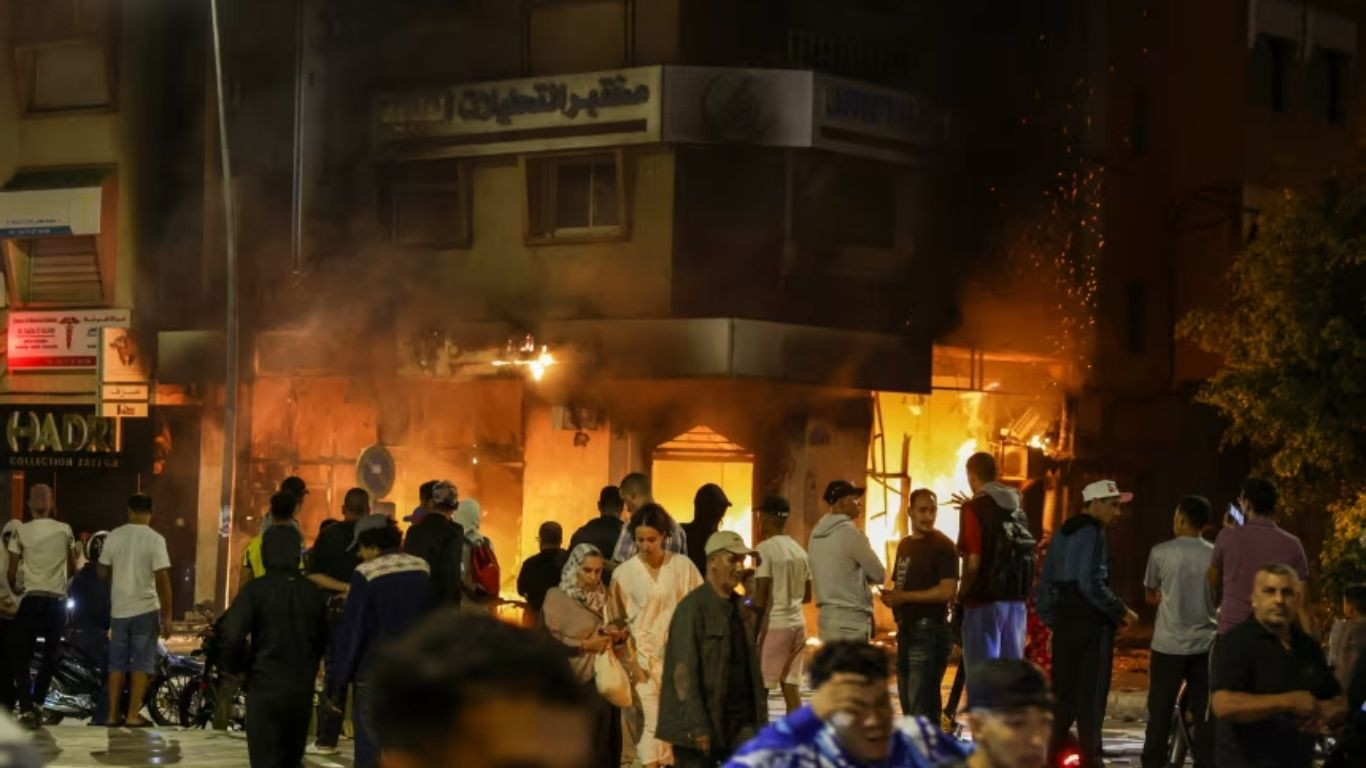
Demonstrations led by young people have swept through more than a dozen Moroccan cities for over a week, highlighting widespread frustration with government corruption, limited opportunities, and social inequality.

The protests are driven by a leaderless collective called Gen Z 212, named after Morocco’s dialing code. Organizers coordinate mainly on Discord, with about 180,000 core members and spin-off groups staging independent demonstrations. Many participants are under 35, and authorities say a significant portion of detainees are minors.

Demonstrators have criticized government spending on World Cup stadiums and infrastructure while essential services such as hospitals, schools, and public health remain underfunded. Morocco has a monthly minimum wage of roughly $300, and in some regions, residents struggle with poor medical care, unpaved roads, and overcrowded classrooms. The recent death of eight women during childbirth in Agadir fueled anger.

Protesters have targeted Prime Minister Aziz Akhannouch and Health Minister Amine Tahraoui, accusing them of corruption and prioritizing private business interests, including World Cup-related projects. Slogans such as “Stadiums are here, but where are the hospitals?” and “Freedom, dignity and social justice” have resonated widely.


Gen Z 212 recently addressed a letter to King Mohammed VI, urging him to dismiss the government, release detainees, and oversee reforms, while maintaining his role as a stabilizing figure.

The government has responded with a mix of crackdowns and dialogue. Police have arrested protesters and used force in some instances, resulting in deaths and injuries, while in other areas security forces have eased their presence. Officials have pledged to strengthen hospitals and open new medical facilities, though demonstrators remain skeptical as stadium projects continue.

The protests reflect a growing trend of youth-driven movements worldwide that bypass traditional political channels to demand accountability and social change.

Tag :

Write Your Comment

Your email address will not be published. Required fields are marked *

Save Your Email and Others Information

About Author Information

Gen Z protests are shaking Morocco over government spending and social inequality

Update Time : 09:27:23 pm, Saturday, 4 October 2025

Demonstrations led by young people have swept through more than a dozen Moroccan cities for over a week, highlighting widespread frustration with government corruption, limited opportunities, and social inequality.

The protests are driven by a leaderless collective called Gen Z 212, named after Morocco’s dialing code. Organizers coordinate mainly on Discord, with about 180,000 core members and spin-off groups staging independent demonstrations. Many participants are under 35, and authorities say a significant portion of detainees are minors.

Demonstrators have criticized government spending on World Cup stadiums and infrastructure while essential services such as hospitals, schools, and public health remain underfunded. Morocco has a monthly minimum wage of roughly $300, and in some regions, residents struggle with poor medical care, unpaved roads, and overcrowded classrooms. The recent death of eight women during childbirth in Agadir fueled anger.

Protesters have targeted Prime Minister Aziz Akhannouch and Health Minister Amine Tahraoui, accusing them of corruption and prioritizing private business interests, including World Cup-related projects. Slogans such as “Stadiums are here, but where are the hospitals?” and “Freedom, dignity and social justice” have resonated widely.
Gen Z 212 recently addressed a letter to King Mohammed VI, urging him to dismiss the government, release detainees, and oversee reforms, while maintaining his role as a stabilizing figure.

The government has responded with a mix of crackdowns and dialogue. Police have arrested protesters and used force in some instances, resulting in deaths and injuries, while in other areas security forces have eased their presence. Officials have pledged to strengthen hospitals and open new medical facilities, though demonstrators remain skeptical as stadium projects continue.

The protests reflect a growing trend of youth-driven movements worldwide that bypass traditional political channels to demand accountability and social change.