9:15 am, Thursday, 4 December 2025

Govt exceeds IMF-set foreign borrowing limit: Dr Salehuddin

  • Reporter Name
  • Update Time : 09:14:58 pm, Tuesday, 7 October 2025
  • 17 Time View

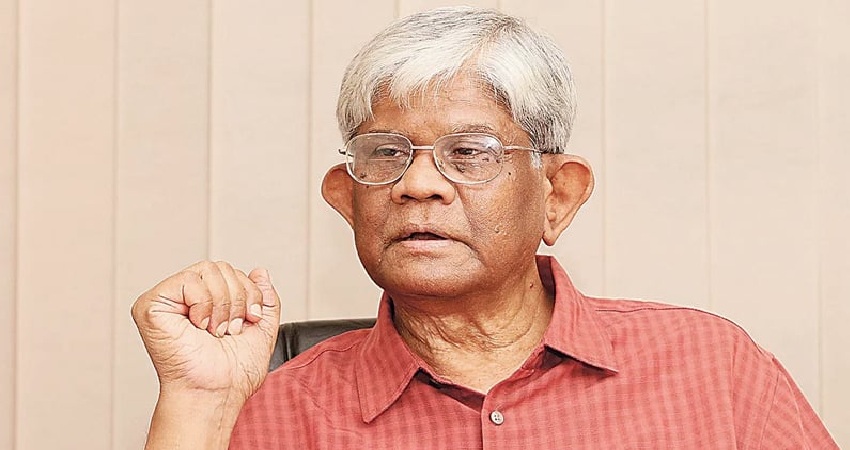
Finance Adviser Dr Salehuddin Ahmed on Tuesday admitted that the government has exceeded the external borrowing ceiling set by International Monetary Fund (IMF), prompting concerns from development partners over the sustainability of country’s debt.

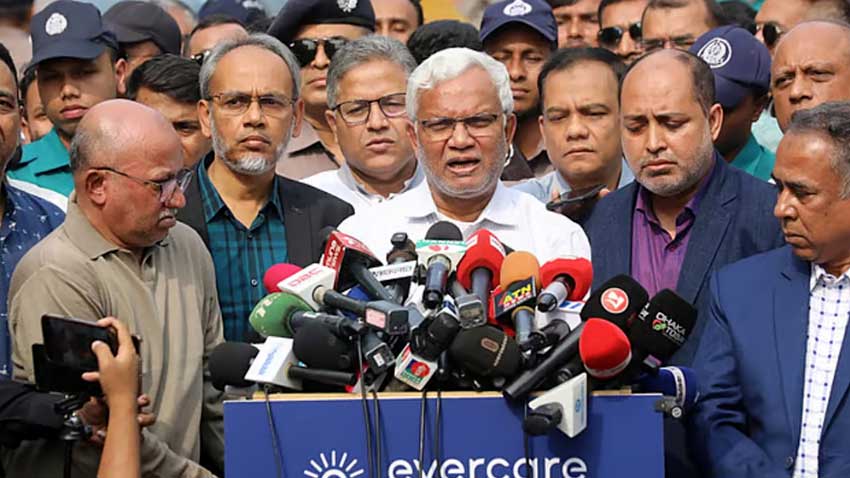
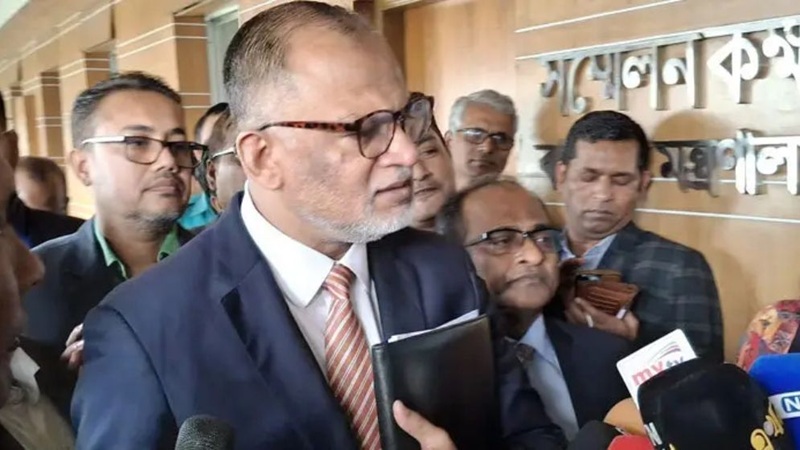
Speaking to reporters following a meeting of Advisers Council Committee on Government Purchase at the Secretariat, Dr Salehuddin stated that foreign borrowing had already gone approximately $4 billion over IMF-prescribed limit.

He acknowledged the breach but also pointed out that the government had made progress in other areas of economic reform under IMF program.

He explained that the borrowing ceiling was introduced as part of efforts to maintain debt sustainability and safeguard the country’s ability to repay.
The intention, he said, was not to restrict development, but to encourage discipline in public finance.

According to him, development partners want to ensure that Bangladesh does not become overambitious in undertaking large-scale projects without considering long-term repayment capacity.
He added that rapid borrowing can lead to inefficiency and resource mismanagement, making the concerns of lenders valid and reasonable.

The IMF has, for the first time, imposed an external borrowing limit for Bangladesh, capping it at $8.44 billion for the 2025–26 fiscal year.

This new condition was included in the updated agreement revealed in IMF’s recent ‘Bangladesh Country Report’, published after the approval and release of the fourth and fifth tranches of loan package amounting to $1.34 billion.

This limit is a critical benchmark for Bangladesh to meet in order to receive further disbursements from the IMF loan program.The original IMF loan program, approved in 2023, was initially worth $4.7 billion.

However, with the June 2025 release of the fourth and fifth tranches, the total program size was increased by $800 million and its duration extended by six months. So far, Bangladesh has received $3.6 billion under the arrangement.

The borrowing ceiling is backed by IMF’s most recent Debt Sustainability Analysis (DSA), which has reclassified Bangladesh as a “medium-risk” country for two consecutive fiscal years—up from its previous “low-risk” status.

The reclassification reflects the increasing burden of debt repayments in relation to the country’s export performance and domestic revenue generation.

According to DSA, the debt-to-export ratio rose sharply to 162.7 percent in the 2023–24 fiscal year, significantly exceeding the earlier projection of around 116 to 118 percent.

The ratio of foreign debt to government revenue also increased, reducing the fiscal space for new borrowing and making debt management more challenging.

Government data shows that foreign borrowing, which stood at only $2.03 billion in 2009–10 fiscal year, has grown rapidly to reach $8.02 billion in 2024–25 fiscal year.

Despite this sharp rise, officials in the interim administration argue that the pace of new borrowing has slowed in recent times compared to earlier years.
Looking ahead, Dr Salehuddin confirmed that preparations are underway for Bangladesh’s participation in the upcoming annual meetings of IMF and World Bank.

He said discussions are ongoing with various international development partners, including IMF, Asian Development Bank, Islamic Development Bank and the World Bank.

He also mentioned that two agreements are expected to be signed with World Bank soon, while other commitments are progressing as planned.
He emphasized that future negotiations with lenders would focus on showcasing the progress Bangladesh has made under IMF program and laying out the government’s upcoming financial strategies.
Dr Salehuddin concluded by noting that once a new elected government is in place, it will take key decisions on future borrowing and project implementation.

Tag :

Write Your Comment

Your email address will not be published. Required fields are marked *

Save Your Email and Others Information

About Author Information

Govt exceeds IMF-set foreign borrowing limit: Dr Salehuddin

Update Time : 09:14:58 pm, Tuesday, 7 October 2025

Finance Adviser Dr Salehuddin Ahmed on Tuesday admitted that the government has exceeded the external borrowing ceiling set by International Monetary Fund (IMF), prompting concerns from development partners over the sustainability of country’s debt.

Speaking to reporters following a meeting of Advisers Council Committee on Government Purchase at the Secretariat, Dr Salehuddin stated that foreign borrowing had already gone approximately $4 billion over IMF-prescribed limit.

He acknowledged the breach but also pointed out that the government had made progress in other areas of economic reform under IMF program.

He explained that the borrowing ceiling was introduced as part of efforts to maintain debt sustainability and safeguard the country’s ability to repay.
The intention, he said, was not to restrict development, but to encourage discipline in public finance.

According to him, development partners want to ensure that Bangladesh does not become overambitious in undertaking large-scale projects without considering long-term repayment capacity.
He added that rapid borrowing can lead to inefficiency and resource mismanagement, making the concerns of lenders valid and reasonable.

The IMF has, for the first time, imposed an external borrowing limit for Bangladesh, capping it at $8.44 billion for the 2025–26 fiscal year.

This new condition was included in the updated agreement revealed in IMF’s recent ‘Bangladesh Country Report’, published after the approval and release of the fourth and fifth tranches of loan package amounting to $1.34 billion.

This limit is a critical benchmark for Bangladesh to meet in order to receive further disbursements from the IMF loan program.The original IMF loan program, approved in 2023, was initially worth $4.7 billion.

However, with the June 2025 release of the fourth and fifth tranches, the total program size was increased by $800 million and its duration extended by six months. So far, Bangladesh has received $3.6 billion under the arrangement.

The borrowing ceiling is backed by IMF’s most recent Debt Sustainability Analysis (DSA), which has reclassified Bangladesh as a “medium-risk” country for two consecutive fiscal years—up from its previous “low-risk” status.

The reclassification reflects the increasing burden of debt repayments in relation to the country’s export performance and domestic revenue generation.

According to DSA, the debt-to-export ratio rose sharply to 162.7 percent in the 2023–24 fiscal year, significantly exceeding the earlier projection of around 116 to 118 percent.

The ratio of foreign debt to government revenue also increased, reducing the fiscal space for new borrowing and making debt management more challenging.

Government data shows that foreign borrowing, which stood at only $2.03 billion in 2009–10 fiscal year, has grown rapidly to reach $8.02 billion in 2024–25 fiscal year.

Despite this sharp rise, officials in the interim administration argue that the pace of new borrowing has slowed in recent times compared to earlier years.
Looking ahead, Dr Salehuddin confirmed that preparations are underway for Bangladesh’s participation in the upcoming annual meetings of IMF and World Bank.

He said discussions are ongoing with various international development partners, including IMF, Asian Development Bank, Islamic Development Bank and the World Bank.

He also mentioned that two agreements are expected to be signed with World Bank soon, while other commitments are progressing as planned.
He emphasized that future negotiations with lenders would focus on showcasing the progress Bangladesh has made under IMF program and laying out the government’s upcoming financial strategies.
Dr Salehuddin concluded by noting that once a new elected government is in place, it will take key decisions on future borrowing and project implementation.