Reporter Name
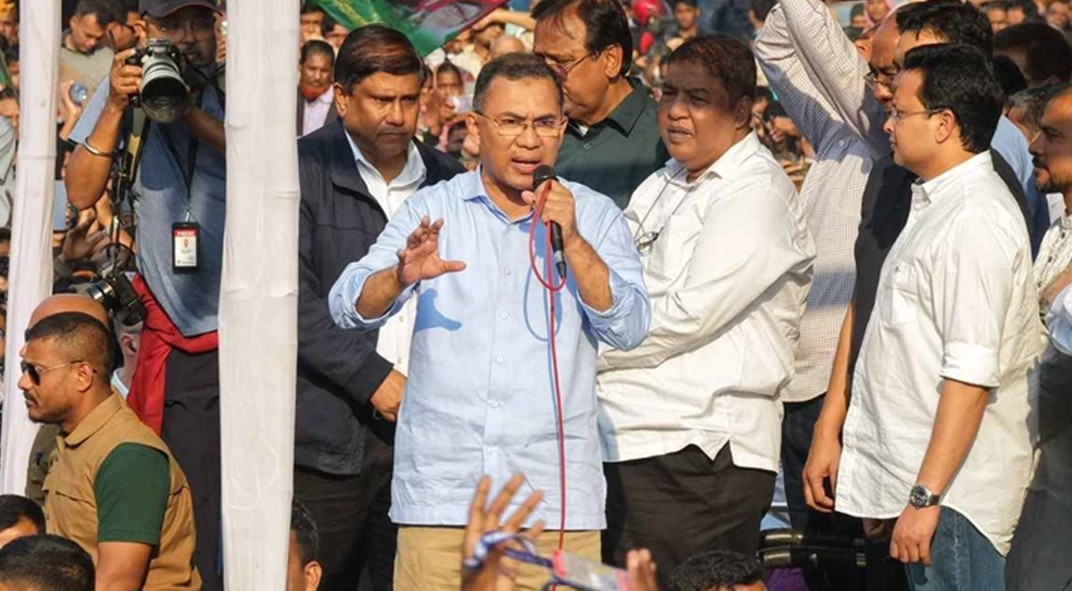
International Crimes Tribunal (ICT) Chief Prosecutor Mohammad Tajul Islam said that if the 15 army officers accused in enforced disappearance cases are indeed under military custody, they must be produced before a court within 24 hours as per the law.
“That is what the law mandates,” Tajul said while speaking to reporters outside the tribunal on Sunday. “After they are presented, it will be up to the court to decide the next course of action. If any legal opinion is sought regarding the detained officers, we will provide it accordingly.”
The Chief Prosecutor noted that the tribunal has not yet received any formal communication regarding the officers reportedly under custody. “Once we are officially informed, we will proceed as per legal provisions,” he added.
When asked whether military custody could be considered as formal arrest or detention, Tajul said, “Until the matter is officially placed before the tribunal, I cannot comment. What is reported in the media or said outside the court is beyond my jurisdiction to interpret.”
He emphasized that the legal process will proceed independently and urged all parties to respect the rule of law.
Earlier, ICT issued arrest warrants against former Prime Minister Sheikh Hasina and 28 top officials from various security forces in two cases related to crimes against humanity — particularly for the enforced disappearances, secret detentions, and torture of opposition figures during the Awami League’s tenure.
The tribunal also accepted five formal charges against them and set October 22 as the date for producing the accused before the court.
Following the order, the Army Adjutant General, Major General Md Hakimuzzaman, said at a Saturday press conference at the Army Officers’ Mess in Dhaka that 15 of the accused officers had been taken into custody and were being kept under separate supervision, while one remained absconding.
However, he clarified that the army had not yet received the tribunal’s arrest warrants nor had there been any communication from the police.
Responding a day later, Chief Prosecutor Tajul Islam stated, “Under the Constitution, International Crimes (Tribunals) Act 1973, and Code of Criminal Procedure, no arrested person may be detained for more than 24 hours without being produced before a court—unless the court grants special permission.”
He further explained that the 1973 ICT Act is a special law designed to prosecute members of the army, navy, air force, intelligence agencies, and other law enforcement or disciplinary forces for crimes that are not covered under ordinary or military laws. “Only the International Crimes Tribunal has the jurisdiction to try such offenses,” he said.
Citing Articles 47(3) and 47A of the Constitution, Tajul noted that any law enacted for the prosecution of international crimes takes precedence over other constitutional provisions, even if inconsistencies arise.
“The 1973 law is protected and supreme — no provision of it can be challenged in the Supreme Court or any other court, nor can any writ petition be entertained against it,” he concluded.