Reporter Name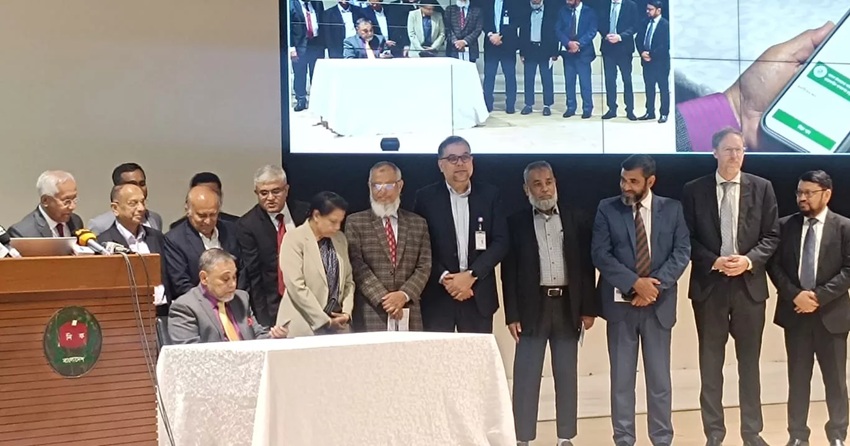
Chief Election Commissioner (CEC) AMM Nasir Uddin on Tuesday said the introduction of a postal balloting system for expatriates and other eligible groups will strengthen Bangladesh’s democracy and deepen the connection between the state and its citizens abroad.
“We firmly believe this initiative will make Bangladesh’s democracy stronger and deepen the bond of our expatriate citizens with the state,” he said while inaugurating the Postal Vote BD mobile app at Nirbachan Bhaban auditorium in the capital.
The app will allow expatriate Bangladeshis and certain other categories of voters to register for postal ballots in the 13th parliamentary election scheduled for early February 2026.
Expatriates, election duty officials, government staff posted outside their constituencies, and inmates will be able to register through the app to cast their votes via postal ballot.
The CEC said expatriates contribute significantly to the nation in terms of economic citizenship and must now be included in its democratic framework as well.
“Through their votes, the foundation of democracy will become broader, more representative, and stronger,” he said.
He noted that the Election Commission began preparations last year to ensure voting rights for citizens abroad, addressing a decades-long deprivation.
The newly introduced hybrid postal balloting system; combining digital registration with manual voting, is intended to overcome the structural difficulties of conducting elections across borders.
“We’ve tried to plug in all humanly conceivable gaps,” he said, adding that expatriates have been unable to vote for 54 years. “This time they can vote. Creating confidence in the system is a major challenge.”
The CEC stressed that democratic rights should no longer be restricted by geography. “We’re not just launching an app; we’re opening a new chapter where Bangladeshi citizenship is global. The postal vote expands our democracy worldwide.”
Election Commissioner Brig Gen (retd) Abul Fazal Md Sanaullah said the EC has developed a hybrid solution that ensures every postal ballot is traceable, as each envelope is personalised and uniquely identifiable.
He acknowledged that no postal voting system in the world is free of challenges. Globally, the average registration rate stands at only 2.7 percent, while the ballot wastage rate is 24 percent. Cybersecurity risks also pose additional challenges. “So it is not unusual to face some glitches,” he said.
Sanaullah added that voters using the postal system must pledge to maintain the secrecy of their ballots.
Election Commissioners Tahmida Ahmad and Md Anwarul Islam Saker attended the event. EC Senior Secretary Akhtar Ahmed delivered the welcome speech, and expatriates along with Bangladeshi diplomats from various missions joined virtually.
Speaking from Saudi Arabia, Bangladesh’s Ambassador Md Delwar Hossain said about 35 lakh Bangladeshis live in the kingdom and expressed hope that many would participate in the upcoming election through the postal system.
According to EC officials, 7–8 percent of Bangladesh’s voters live abroad, and the commission aims to include around 50 lakh expatriate voters from 143 countries.
The EC plans to start sending postal ballots to various destinations soon after the election schedule is announced.
Expatriate voters will be able to cast their ballots after electoral symbols are allocated and mail them back to their respective returning officers via their local post offices.