11:21 pm, Tuesday, 2 December 2025

EC shares force deployment plan with law enforcers ahead of polls

  • Reporter Name
  • Update Time : 09:50:11 pm, Thursday, 27 November 2025
  • 15 Time View

The Election Commission (EC) on Thursday shared its force deployment framework with law enforcement agencies as preparations intensify for the national election expected in early February 2026.

EC Senior Secretary Akhtar Ahmed said the Commission has provided an outline of the deployment plan and it is now up to the respective forces to devise the detailed arrangements.

How they choose to deploy; whether as static, reserve or striking units at polling centres, will be determined by the agencies themselves, while Home Ministry will decide the number of personnel and deployment duration.

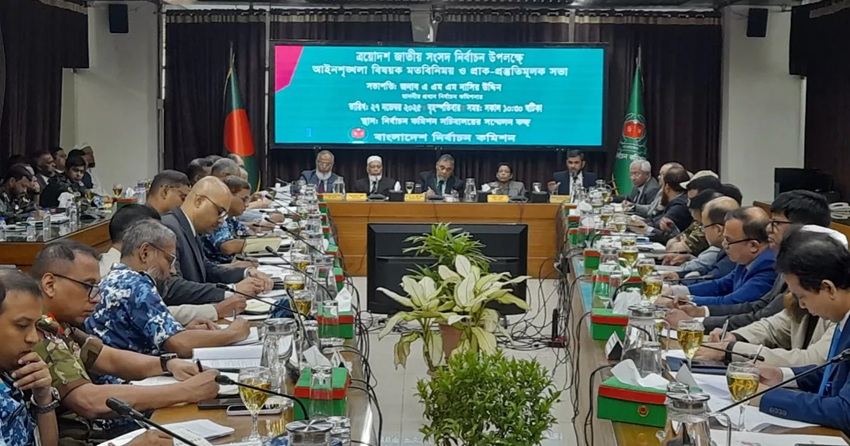
He made the remarks while briefing reporters after a meeting with security agencies, including the armed forces, at Nirbachan Bhaban.

The meeting, chaired by Chief Election Commissioner AMM Nasir Uddin, brought together senior representatives from the Army, Navy, Air Force, Home Ministry, Police, RAB, BGB, Coast Guard, Ansar and VDP, the Armed Forces Division, DGFI, NSI, NTMC, SB and CID.

Discussions centred on maintaining law and order during the polls, ensuring the safety of polling stations, election materials and officials, recovering illegal arms and removing unauthorised campaign materials such as posters.

Akhtar Ahmed noted that the EC does not have its own security force and depends on coordinated efforts from law enforcement agencies.

He said the agencies had assured the Commission that they would begin field operations from the outset and play an effective role throughout the election period.

Responding to a question on whether the armed forces’ magistracy power could conflict with the legal framework once the election schedule is announced, he said the armed forces are currently defined as part of the law enforcement structure and their magistracy authority will remain valid until February 2026.

He added that he sees no contradiction with existing laws.

Explaining the outline of the deployment strategy, he said it is built around three core components: static deployment at polling stations, the installation of static and mobile check posts supplemented by patrolling teams based on geographic conditions and road access and the formation of a central reserve force for rapid response. What is commonly referred to as the striking force will operate within these components to ensure mobility and deterrence depending on the situation.

He also said that the EC would utilise NTMC’s technological capabilities and that cybersecurity issues would be closely monitored. Describing the overall framework, he emphasised that “this is our strategic plan.”

Tag :

Write Your Comment

Your email address will not be published. Required fields are marked *

Save Your Email and Others Information

About Author Information

EC shares force deployment plan with law enforcers ahead of polls

Update Time : 09:50:11 pm, Thursday, 27 November 2025

The Election Commission (EC) on Thursday shared its force deployment framework with law enforcement agencies as preparations intensify for the national election expected in early February 2026.

EC Senior Secretary Akhtar Ahmed said the Commission has provided an outline of the deployment plan and it is now up to the respective forces to devise the detailed arrangements.

How they choose to deploy; whether as static, reserve or striking units at polling centres, will be determined by the agencies themselves, while Home Ministry will decide the number of personnel and deployment duration.

He made the remarks while briefing reporters after a meeting with security agencies, including the armed forces, at Nirbachan Bhaban.

The meeting, chaired by Chief Election Commissioner AMM Nasir Uddin, brought together senior representatives from the Army, Navy, Air Force, Home Ministry, Police, RAB, BGB, Coast Guard, Ansar and VDP, the Armed Forces Division, DGFI, NSI, NTMC, SB and CID.

Discussions centred on maintaining law and order during the polls, ensuring the safety of polling stations, election materials and officials, recovering illegal arms and removing unauthorised campaign materials such as posters.

Akhtar Ahmed noted that the EC does not have its own security force and depends on coordinated efforts from law enforcement agencies.

He said the agencies had assured the Commission that they would begin field operations from the outset and play an effective role throughout the election period.

Responding to a question on whether the armed forces’ magistracy power could conflict with the legal framework once the election schedule is announced, he said the armed forces are currently defined as part of the law enforcement structure and their magistracy authority will remain valid until February 2026.

He added that he sees no contradiction with existing laws.

Explaining the outline of the deployment strategy, he said it is built around three core components: static deployment at polling stations, the installation of static and mobile check posts supplemented by patrolling teams based on geographic conditions and road access and the formation of a central reserve force for rapid response. What is commonly referred to as the striking force will operate within these components to ensure mobility and deterrence depending on the situation.

He also said that the EC would utilise NTMC’s technological capabilities and that cybersecurity issues would be closely monitored. Describing the overall framework, he emphasised that “this is our strategic plan.”