Reporter Name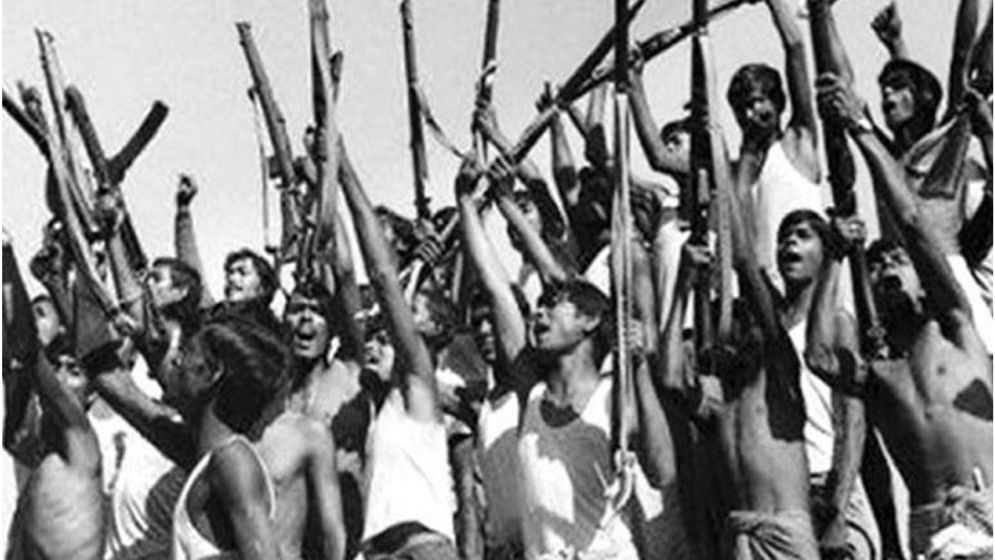
In recent times, a number of controversial statements about our Great Liberation War and attempts to spread renewed confusion about history have been observed. This has created concern and anxiety in various quarters.
Eminent figures say that to safeguard the achievements of the Liberation War and ensure the nation’s correct direction, what is needed is not controversy but the practice of accurate and comprehensive history. Because in independent Bangladesh, the Liberation War stands above all else. In other words, the very existence of Bangladesh is rooted in the Great Liberation War; everything else comes after that.
Analysts say that our greatest achievement is independence. Nothing is greater than independence. In the history of independence, everyone’s contribution must be acknowledged without hesitation. Under the leadership of Bangabandhu Sheikh Mujibur Rahman and following the declaration of Shaheed Ziaur Rahman, the nine-month Liberation War was fought. The martyrs of this people’s war must be accorded due honour. Likewise, the mass uprising against autocracy in 1990 and the anti-fascist student–people’s uprising of 2024 must receive their rightful recognition. In trying to deny any particular individual, there must be no scope to distort the independence struggle and the Liberation War. It is also true that Bangladesh’s old four state principles were never properly realised even in the past. The principal reason behind today’s situation is the absence of democracy. How this lack of democracy gradually led us to the present state needs to be analysed carefully.
Former ambassador Humayun Kabir said that the Liberation War is a reflection of our very existence. There is no scope for debate about it. There may be debate about how the home or the country should be organised now, but the Liberation War is the foundation of Bangladesh, and questioning this foundation is not reasonable. If it is questioned, the very existence of our country will be questioned. The people of Bangladesh will never support such thoughts or attempts. Through the Liberation War, Bangladesh was first established in history as a nation-state. Holding on to this foundation, we must move forward. There is no opportunity to discard it. He said that if one debates the Liberation War, there is no Bangladesh. And if there is no Bangladesh, we ourselves do not exist. Therefore, the Liberation War must be the starting point of all our initiatives.
Political scientist and former chairman of the Department of Political Science at the University of Dhaka, Professor Dr Mohammad Nurul Amin Bepari, told Bangladesh Pratidin that everyone respects and acknowledges the Liberation War. Those who did not accept the Liberation War in 1971 had a different context and offered different interpretations. However, the questions that have arisen after the 2024 mass uprising are not, in fact, about the Liberation War of ’71. A deeper analysis shows that the spirit on which the 1971 Liberation War was fought and on which Bangladesh became independent was later plundered.
The freedom fighters wanted to establish a democratic social and state system, to remove discrimination, and to ensure solidarity and unity among the people of this land. But we saw that in her final years, Sheikh Mujib’s daughter (Sheikh Hasina) ruled the country in such a way that democracy withered and was ultimately extinguished. In effect, she governed the country through an undemocratic, one-man authoritarian system that many describe as fascist. He added that continued debate and controversy over the Liberation War would harm the country.
Even if the Awami League is set aside for the moment, the BNP is also an organising party of the Liberation War and upholds its spirit. No one can ignore such a major party. If anyone tries to stand against the BNP while disregarding the Liberation War, conflict will again arise. And those who carried out the 2024 mass uprising will seek to build the country by embracing the spirit of the Liberation War. As a result, debate over the Liberation War is unlikely to intensify greatly in the future.
Iftekharuzzaman, Executive Director of Transparency International Bangladesh (TIB), said that the dreams, ideals and objectives of Bangladesh’s Liberation War and the spirit and goals of the July mass uprising are woven together by a single thread. In the eternal pursuit of equality, human dignity and social justice—ensuring discrimination-free, equal-rights-based coexistence across all diversities of nation, religion, gender and culture, and building a well-governed, corruption-free and accountable state structure—the people of this country shed blood in 1971, and in the same way, the fighters of 2024 made sacrifices inspired by the same motivation. The victory of ’71 was against subjugation, and the victory of ’24 was against an authoritarian kleptocracy. In both cases, our movements were aimed at securing fundamental human rights and economic liberation for all the people of this country, regardless of identity or position. This movement is ongoing and will continue.