1:35 am, Wednesday, 17 December 2025

WaterAid Bangladesh launches climate-resilient WASH finance study

  • Reporter Name
  • Update Time : 09:12:59 pm, Tuesday, 16 December 2025
  • 6 Time View

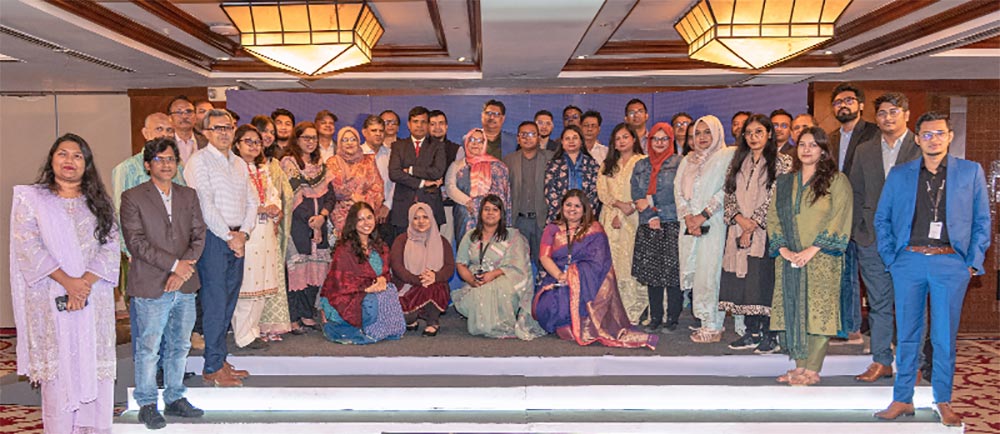
WaterAid Bangladesh, in collaboration with the World Resources Institute (WRI), the Centre for Participatory Research and Development (CPRD), and ACME AI, disseminated new evidence on climate-resilient WASH finance and formally launched a digital Green Accountability Monitor designed to track and analyse climate finance flows for the WASH sector.

The national dissemination event, held in Dhaka, was moderated by ZakiaNaznin, Programme Lead – Climate Resilience at WaterAid Bangladesh. Dr Shah Abdul Saadi, Deputy Secretary of the Economic Relations Division (ERD), attended as Chief Guest. Md Shamsuddoha, Chief Executive of CPRD, was present as Special Guest, while Partha Hefaz Shaikh, Director – Programme and Policy Advocacy, WaterAid Bangladesh, joined as Guest of Honour.

Two thematic presentations were delivered by Sumaiya Binte Anwar, Programme Manager, CPRD, and Sadhli Roomy, CEO and Co-founder, ACME AI, highlighting Bangladesh’s climate finance landscape and proving the functionalities of the newly launched digital platform.

In his opening remarks, Partha Hefaz Shaikh underlined the significance of grounding climate action within the realities of WASH service delivery, particularly for communities facing recurrent climate shocks. He noted that data-driven climate finance governance is critical to strengthening resilience and ensuring fair resource allocation.

Chief Guest Dr Shah Abdul Saadi emphasised the need to integrate climate-resilient WASH within national policy frameworks and future development planning. He highlighted how floods, droughts, and salinity intrusion-often driven or intensified by climate change-directly threaten WASH services and public health. He underscored the importance of improving the quality, transparency, and accountability of climate finance flows to the sector.

Special Guest Md Shamsuddoha pointed out that while Bangladesh has a robust climate finance architecture, WASH continues to receive inadequate visibility in adaptation financing. He stressed that local realities, community engagement, and gender-responsive indicators must be placed at the centre of climate budgeting. He added that reliable and accessible data is essential to strengthen monitoring, enhance transparency, and ensure that investments benefit the most climate-vulnerable populations.
During the interactive discussion, participants explored policy gaps, opportunities for improved coordination, and the role of the digital platform in supporting government agencies, researchers, and development partners with real-time insights.

Against this backdrop, WaterAid Bangladesh undertook the study “Mapping Climate Finance Flows for WASH in Bangladesh: Architecture, Gaps, and Opportunities”, conducted with CPRD and supported by WRI. The research examines how climate finance is currently structured, where gaps persist, and what reforms are required to prioritise climate-resilient WASH investments.


Tag :

Write Your Comment

Your email address will not be published. Required fields are marked *

Save Your Email and Others Information

About Author Information

WaterAid Bangladesh launches climate-resilient WASH finance study

Update Time : 09:12:59 pm, Tuesday, 16 December 2025

WaterAid Bangladesh, in collaboration with the World Resources Institute (WRI), the Centre for Participatory Research and Development (CPRD), and ACME AI, disseminated new evidence on climate-resilient WASH finance and formally launched a digital Green Accountability Monitor designed to track and analyse climate finance flows for the WASH sector.

The national dissemination event, held in Dhaka, was moderated by ZakiaNaznin, Programme Lead – Climate Resilience at WaterAid Bangladesh. Dr Shah Abdul Saadi, Deputy Secretary of the Economic Relations Division (ERD), attended as Chief Guest. Md Shamsuddoha, Chief Executive of CPRD, was present as Special Guest, while Partha Hefaz Shaikh, Director – Programme and Policy Advocacy, WaterAid Bangladesh, joined as Guest of Honour.

Two thematic presentations were delivered by Sumaiya Binte Anwar, Programme Manager, CPRD, and Sadhli Roomy, CEO and Co-founder, ACME AI, highlighting Bangladesh’s climate finance landscape and proving the functionalities of the newly launched digital platform.

In his opening remarks, Partha Hefaz Shaikh underlined the significance of grounding climate action within the realities of WASH service delivery, particularly for communities facing recurrent climate shocks. He noted that data-driven climate finance governance is critical to strengthening resilience and ensuring fair resource allocation.

Chief Guest Dr Shah Abdul Saadi emphasised the need to integrate climate-resilient WASH within national policy frameworks and future development planning. He highlighted how floods, droughts, and salinity intrusion-often driven or intensified by climate change-directly threaten WASH services and public health. He underscored the importance of improving the quality, transparency, and accountability of climate finance flows to the sector.

Special Guest Md Shamsuddoha pointed out that while Bangladesh has a robust climate finance architecture, WASH continues to receive inadequate visibility in adaptation financing. He stressed that local realities, community engagement, and gender-responsive indicators must be placed at the centre of climate budgeting. He added that reliable and accessible data is essential to strengthen monitoring, enhance transparency, and ensure that investments benefit the most climate-vulnerable populations.
During the interactive discussion, participants explored policy gaps, opportunities for improved coordination, and the role of the digital platform in supporting government agencies, researchers, and development partners with real-time insights.

Against this backdrop, WaterAid Bangladesh undertook the study “Mapping Climate Finance Flows for WASH in Bangladesh: Architecture, Gaps, and Opportunities”, conducted with CPRD and supported by WRI. The research examines how climate finance is currently structured, where gaps persist, and what reforms are required to prioritise climate-resilient WASH investments.