Reporter Name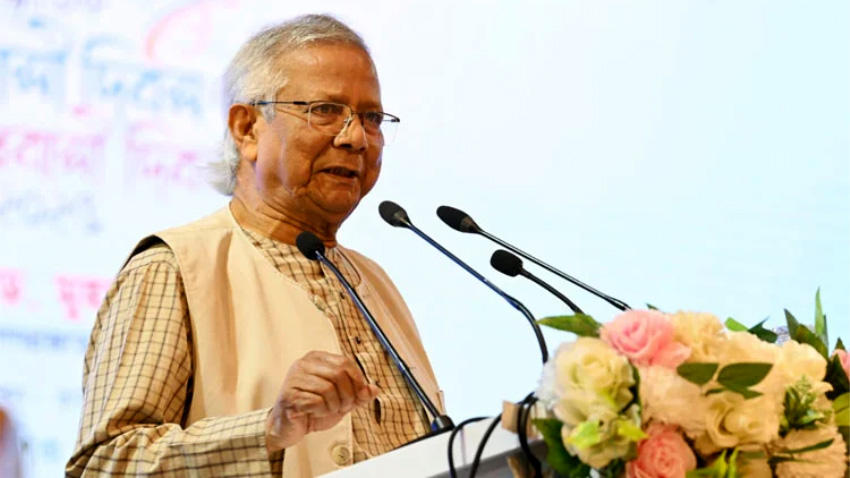
Chief Adviser (CA) Professor Muhammad Yunus on Wednesday called for a fundamental reform of the country’s overseas employment system, stressing the need to eliminate brokers and fraud to protect migrant workers and restore the country’s credibility abroad.
Speaking at a programme marking International Migrants Day and National Expatriates Day 2025 at the Osmani Memorial Auditorium, Prof Yunus said overseas migration has become deeply entangled with broker syndicates, forged documents and systemic weaknesses, creating a prolonged and complex crisis.
He said that without dismantling the broker-dominated system, claims of progress in overseas employment would remain meaningless. Despite various government initiatives, he noted, the expected impact has not been achieved as the core structure controlled by intermediaries remains largely untouched.
Recalling his experience with Grameen Bank, Prof Yunus said he first became aware of the depth of the problem when rural women sought loans to send their children abroad, only to be drawn into opaque broker networks. He described the system as global in scale, where money changes hands without transparency and the state remains largely disconnected.
The Chief Adviser said breaking this cycle is essential for increasing remittance earnings and ensuring dignified and safe migration. He warned that document forgery in the migration process has severely damaged Bangladesh’s international image, leading to visa restrictions in several Middle Eastern countries and even mistrust of Bangladeshi documents at foreign ports.
He acknowledged some progress, including the resolution of issues faced by Bangladeshi seafarers and gradual reopening of labour markets, but said much more needs to be done. He rejected the notion that Bangladeshi workers lack skills, pointing to the success of expatriates in countries such as Italy and the United Kingdom.
Prof Yunus said Bangladesh has vast untapped potential to meet global labour demand, citing Japan as an example. He noted that during his visit there earlier this year, Japan immediately agreed to accept 100,000 Bangladeshi workers over five years and could potentially take many more, provided language and vocational skills are ensured.
Describing Bangladesh as a “gold mine of youth,” he said around 90 million people in the country are under 27, at a time when many countries are facing labour shortages. Preparing young people to meet global workforce needs, he said, is not a matter of funding alone but of governance, discipline and system reform.
“When a worker goes abroad, they carry the country with them,” Prof Yunus said, adding that failure to harness this demographic advantage would prevent any real change in the nation’s future.
At the event, Expatriates’ Welfare and Overseas Employment Adviser Professor Dr Asif Nazrul attended as special guest, while Senior Secretary Dr Neyamat Ullah Bhuiyan delivered the welcome address. Prof Asif Nazrul also formally handed over a task force report on reforms and strategic realignment of the ministry to the Chief Adviser.
A total of 86 expatriate Bangladeshis were honoured as commercially important persons under three categories for investment, remittance contributions and promotion of Bangladeshi products abroad. Prof Yunus also distributed cheques for insurance benefits, medical assistance, financial aid, compensation and scholarships for children of expatriate workers.
Expatriates and returnee migrants shared their experiences at the programme, which began with a documentary highlighting the role of Bangladeshi expatriates in the July 2024 uprising and their contribution to the economy.
Reflecting on recent diplomatic efforts, Prof Yunus said his government had worked to secure the release of Bangladeshi migrants jailed abroad for demonstrating in solidarity with events at home, and had addressed long-standing issues with Malaysia over workers who paid full costs but failed to travel.
He concluded by stressing that young people are more valuable than natural resources and urged coordinated efforts to create a transparent, broker-free migration system that allows Bangladesh’s workforce to thrive globally.