Reporter Name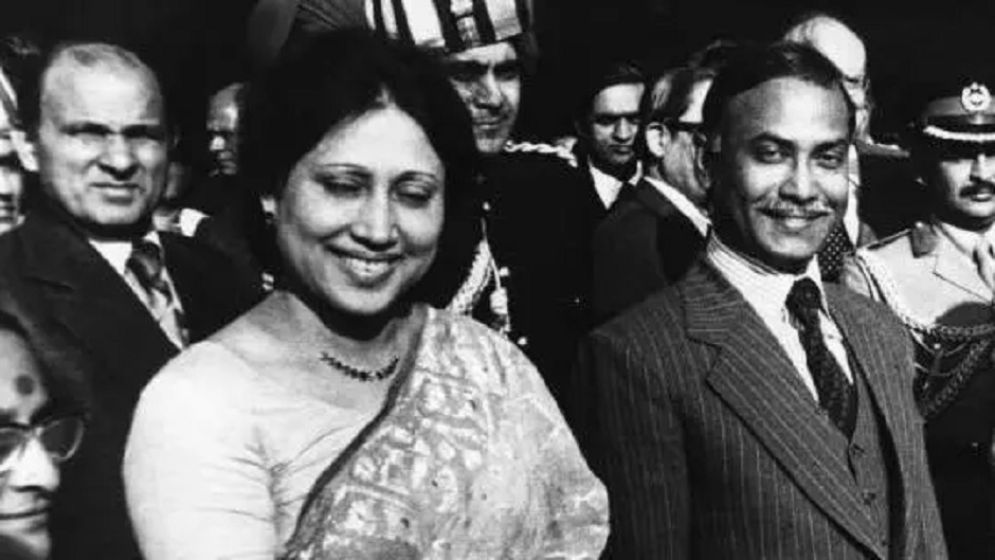
The story dates back to the very end of March 1971. As dusk fell, two military jeeps pulled up outside a guerrilla training camp in Sajek Valley in the Chittagong Hill Tracts — an area where fighters of the Mizo National Front (MNF) had for years been running armed operations against the Indian state.
That day, MNF’s “Supreme Commander” Laldenga was at the camp. He is believed to have been sitting with his companions, having bai — a traditional Mizo soup. Although he also had a residence in Lalmatia in Dhaka as a guest of the East Pakistan government, he happened to be staying at the camp at the time.
As usual, Laldenga’s trusted aide and young commando Zoramthanga — who would go on to become the Chief Minister of India’s state of Mizoram some 27 years later — was closely by his side.
From the jeeps stepped out Major Ziaur Rahman of the Pakistan Army. At the time, he was serving as the Assistant Commanding Officer of the East Bengal Regiment in Chattogram and had long maintained warm and friendly relations with the Mizo leadership.
Just four or five days earlier, following the Pakistani military’s crackdown in Dhaka, Bangladesh’s Liberation War had fully erupted. In Chattogram, Major Zia not only led a rebellion by detaining his commanding officer but also famously declared independence over the radio from the Kalurghat station.
The Mizo leaders were well aware of these developments. So Laldenga likely had little difficulty grasping why Ziaur Rahman had suddenly arrived at their camp.
After a brief exchange of customary hospitality, Major Zia got straight to the point:
“Without wasting your time, let me come directly to the issue.”
Laldenga replied promptly, “Please go ahead — I always expected that you would turn up one day.”
The entire story was recounted to this correspondent about three years ago by Zoramthanga himself, then Chief Minister of Mizoram, during a meeting at his office in Aizawl. As he had witnessed the events firsthand, the remainder of the account follows his narration.
‘You Will No Longer Receive Protection’
Zoramthanga recalled that Major Zia’s message was clear: his regiment had mutinied against the Pakistani Army and defected, meaning they would no longer be able to offer any assistance or protection to the Mizo guerrillas.
Since the mid-1960s, Mizo fighters had been given shelter in the Chittagong Hill Tracts following a decision by the Pakistan government, and the Pakistani military had extended all kinds of support. From camps and bases near the border, the MNF had been waging its armed struggle against India.
The outbreak of Bangladesh’s Liberation War, however, changed the situation overnight.
Major Zia proposed two options: either the Mizos could join the pro-liberation rebel soldiers and fight against the Pakistanis, or they should leave the Chittagong Hill Tracts and move towards the Arakan Hills in Burma — in other words, stay out of the conflict altogether.
If they chose to remain in Sajek Valley, Zia made it clear that the defecting Bengali soldiers would be unable to provide assistance or protection as before.
Zoramthanga remembered him saying, “We have no hostility towards the Mizos — in fact, we care deeply for them. But under these circumstances, there is truly nothing we can do.”
Laldenga listened patiently before responding slowly: “India — the country we are fighting against — is on your side. How can we possibly join you?”
He added that betraying the Pakistani government, which had given them shelter and hospitality, was also not an option.
Laldenga firmly stated that the MNF would make its own decisions. Hearing this, Major Zia realised there was little point in prolonging the discussion.
‘Why Don’t You Stay the Night?’
By then, darkness was falling. In the hills, night descends quickly, and the discussions had gone on for some time. Seeing this, Laldenga suggested to his guest that it would be unwise to return to the town that night and invited him to stay at the camp.
After some thought, Major Zia agreed. The problem, however, was that he had not come prepared for an overnight stay and did not even have a change of clothes.
Despite it being the month of Chaitra, Sajek Valley can be bitterly cold at night — and the cold that evening was particularly harsh.
Noticing Zia’s discomfort, Laldenga instructed his men to arrange an overcoat for him. A coat roughly close to his size was hurriedly found. Its owner, however, was not present at the camp that day.
The overcoat did not fit him well at all, but without any fuss, Zia wrapped himself in it and spent the night half-asleep on a camp chair.
What he ate for dinner that night is no longer remembered. At daybreak, he instructed his men to prepare, jumped into the jeep, and sped off towards Chattogram.
He was still wearing that ill-fitting, jungle-patterned military overcoat.
‘We Asked Khaleda for It Back’
Fast forward 35 years to March 2006.
Ziaur Rahman’s wife, Khaleda Zia — then serving her second term as Prime Minister of Bangladesh — visited Delhi on a state visit at the invitation of Indian Prime Minister Manmohan Singh.
Zoramthanga explained that by then, following the 1986 Mizo Peace Accord, Mizoram had become a full-fledged state of India, and he was serving his second term as its Chief Minister.
As the head of a neighbouring Indian state, he too was invited by the central government to Delhi and was granted a separate meeting with Khaleda Zia.
During that meeting, Zoramthanga recounted the entire Sajek Valley incident. Mrs Zia appeared to be completely unaware of it.
He then joked, “By the way, my comrade’s overcoat was never returned by Mr Ziaur Rahman. Perhaps you could check whether it’s still lying somewhere at your home?”
Khaleda Zia burst out laughing and replied in jest, “I’ll certainly look for it. And if I find it, I’ll invite you — but you will have to come to Dhaka to collect it yourself.”
In fact, five months after returning to Dhaka, Prime Minister Khaleda Zia sent a formal letter inviting the Chief Minister of Mizoram to visit Bangladesh.
The letter made no mention of whether the overcoat had been found.
Zoramthanga said that soon after the invitation was sent, political instability intensified in Bangladesh, and within three or four months, Khaleda Zia stepped down from office.
As a result, his visit to Dhaka never materialised.
And so, the overcoat borrowed from the Mizo guerrillas was never returned by the Zia family.