7:06 am, Wednesday, 14 January 2026

CA directs to build independent Power and Energy Research institution

  • Reporter Name
  • Update Time : 09:17:24 pm, Wednesday, 7 January 2026
  • 22 Time View
Chief Adviser Professor Muhammad Yunus has directed the creation of a separate, independent institution dedicated to research in the power and energy sectors while the Ministry of Power, Energy and Mineral Resources presented the Power and Energy Sector Master Plan 2026–2050.

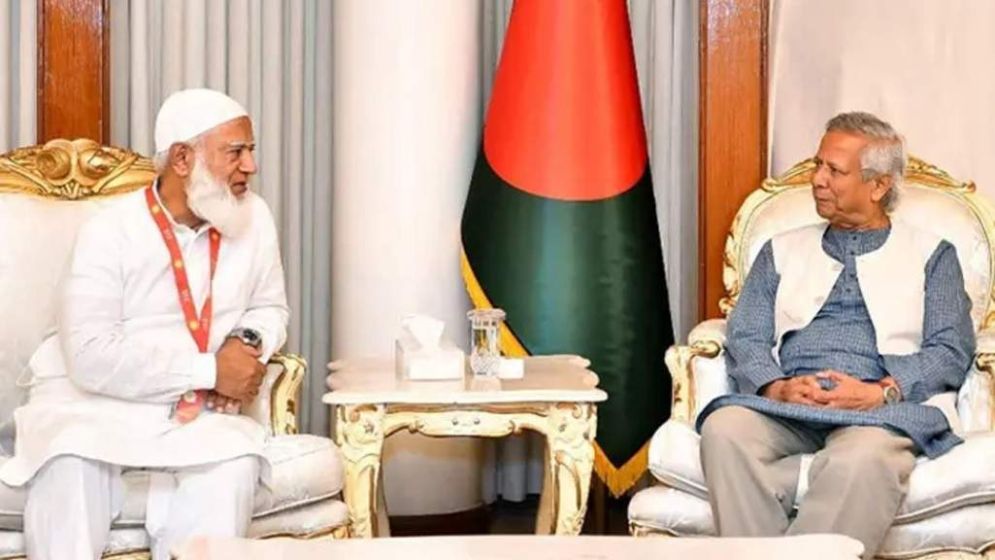
The master plan was presented at a meeting, chaired by the Chief Adviser at the state guest house Jamuna in Dhaka.

The meeting was attended by Power, Energy and Mineral Resources Adviser Muhammad Fouzul Kabir Khan; Finance Adviser Dr Salehuddin Ahmed; Commerce Adviser Sheikh Bashir Uddin; Industries Adviser Adilur Rahman Khan; Bangladesh Investment Development Authority (BIDA) Executive Chairman Chowdhury Ashik Mahmud Bin Harun; Special Assistant to the Chief Adviser for Posts, Telecommunications and ICT Faiz Ahmad Taiyeb; and senior officials from relevant ministries.

The master plan aims to ensure reliable, affordable and sustainable primary energy and electricity for all citizens by optimising domestic resources, strengthening energy security, improving efficiency and ensuring environmental responsibility.

During the meeting, policy gaps in the previous three master plans were identified and reviewed. The new plan will be implemented in three phases: 2026–2030, 2030–2040 and 2040–2050.

Under the first-track priority projects for 2026–2030, the plan includes offshore exploration rounds, boosting gas production, ensuring LNG supply security, expanding refinery capacity and increasing strategic fuel storage capacity.

Long-term strategic initiatives discussed include offshore gas development, large-scale refinery and petrochemical industry expansion, hydrogen and ammonia infrastructure development, geothermal energy development, and tidal and ocean wave-based power generation.

Thanking officials for the detailed presentation, Professor Yunus said the power and energy sector is the backbone of Bangladesh’s economy. “If this sector becomes strong, the economy will stand firm. It affects the lives of every citizen,” he said.
The Chief Adviser instructed that a separate institution be established for research in power and energy. “There must be an independent research and development institute. It cannot function under a ministry. It should be a strong, autonomous institution that maintains links with similar organisations worldwide and supports the government in policy formulation,” he said.

Criticising past unplanned development, Professor Yunus said many projects were implemented in the wrong locations and structures. “We must rethink everything from the beginning. Just because something was done a certain way in the past does not mean we must continue on the same path. We need a proper framework and discipline, and for that, a research centre is essential,” he added.

He also directed that research be carried out on alternative energy sources.

According to the ministry, the master plan highlights how efficiency improvements and the use of clean energy can reduce climate impacts while creating significant economic opportunities, even as the energy sector grows rapidly.
Electricity demand is projected to rise from 17 gigawatts to 59 gigawatts by 2050, creating environmental and social pressures. While total emissions will increase with higher power generation, the use of cleaner and more efficient technologies is expected to significantly reduce emissions per unit of electricity—from 0.62 to 0.35 tonnes of CO₂ per megawatt-hour.

By 2050, climate initiatives under the plan could reduce annual carbon dioxide emissions by 64.5 million tonnes and cumulative emissions by around 1,600 million tonnes.

Several reforms have already been implemented as part of the master plan, including the repeal of the Power and Energy Rapid Supply Enhancement (Special Provisions) Act, 2010—commonly known as the Quick Rental Act—the adoption of the Merchant Power Policy 2025, Renewable Energy Policy 2025, Rooftop Solar Programme 2025 and Net Metering Guidelines 2025.

The meeting also discussed recommendations on power generation, transmission, distribution, environmental and economic sustainability, and institutional reforms, with the goal of making the primary energy sector more secure, efficient, less import-dependent and financially sustainable by 2050.
According to the master plan, investment requirements for the period 2026–2050 are estimated at USD 70–85 billion for the energy sector and USD 107.25 billion for the power sector.


Tag :

Write Your Comment

Your email address will not be published. Required fields are marked *

Save Your Email and Others Information

About Author Information

CA directs to build independent Power and Energy Research institution

Update Time : 09:17:24 pm, Wednesday, 7 January 2026
Chief Adviser Professor Muhammad Yunus has directed the creation of a separate, independent institution dedicated to research in the power and energy sectors while the Ministry of Power, Energy and Mineral Resources presented the Power and Energy Sector Master Plan 2026–2050.

The master plan was presented at a meeting, chaired by the Chief Adviser at the state guest house Jamuna in Dhaka.

The meeting was attended by Power, Energy and Mineral Resources Adviser Muhammad Fouzul Kabir Khan; Finance Adviser Dr Salehuddin Ahmed; Commerce Adviser Sheikh Bashir Uddin; Industries Adviser Adilur Rahman Khan; Bangladesh Investment Development Authority (BIDA) Executive Chairman Chowdhury Ashik Mahmud Bin Harun; Special Assistant to the Chief Adviser for Posts, Telecommunications and ICT Faiz Ahmad Taiyeb; and senior officials from relevant ministries.

The master plan aims to ensure reliable, affordable and sustainable primary energy and electricity for all citizens by optimising domestic resources, strengthening energy security, improving efficiency and ensuring environmental responsibility.

During the meeting, policy gaps in the previous three master plans were identified and reviewed. The new plan will be implemented in three phases: 2026–2030, 2030–2040 and 2040–2050.

Under the first-track priority projects for 2026–2030, the plan includes offshore exploration rounds, boosting gas production, ensuring LNG supply security, expanding refinery capacity and increasing strategic fuel storage capacity.

Long-term strategic initiatives discussed include offshore gas development, large-scale refinery and petrochemical industry expansion, hydrogen and ammonia infrastructure development, geothermal energy development, and tidal and ocean wave-based power generation.

Thanking officials for the detailed presentation, Professor Yunus said the power and energy sector is the backbone of Bangladesh’s economy. “If this sector becomes strong, the economy will stand firm. It affects the lives of every citizen,” he said.
The Chief Adviser instructed that a separate institution be established for research in power and energy. “There must be an independent research and development institute. It cannot function under a ministry. It should be a strong, autonomous institution that maintains links with similar organisations worldwide and supports the government in policy formulation,” he said.

Criticising past unplanned development, Professor Yunus said many projects were implemented in the wrong locations and structures. “We must rethink everything from the beginning. Just because something was done a certain way in the past does not mean we must continue on the same path. We need a proper framework and discipline, and for that, a research centre is essential,” he added.

He also directed that research be carried out on alternative energy sources.

According to the ministry, the master plan highlights how efficiency improvements and the use of clean energy can reduce climate impacts while creating significant economic opportunities, even as the energy sector grows rapidly.
Electricity demand is projected to rise from 17 gigawatts to 59 gigawatts by 2050, creating environmental and social pressures. While total emissions will increase with higher power generation, the use of cleaner and more efficient technologies is expected to significantly reduce emissions per unit of electricity—from 0.62 to 0.35 tonnes of CO₂ per megawatt-hour.

By 2050, climate initiatives under the plan could reduce annual carbon dioxide emissions by 64.5 million tonnes and cumulative emissions by around 1,600 million tonnes.

Several reforms have already been implemented as part of the master plan, including the repeal of the Power and Energy Rapid Supply Enhancement (Special Provisions) Act, 2010—commonly known as the Quick Rental Act—the adoption of the Merchant Power Policy 2025, Renewable Energy Policy 2025, Rooftop Solar Programme 2025 and Net Metering Guidelines 2025.

The meeting also discussed recommendations on power generation, transmission, distribution, environmental and economic sustainability, and institutional reforms, with the goal of making the primary energy sector more secure, efficient, less import-dependent and financially sustainable by 2050.
According to the master plan, investment requirements for the period 2026–2050 are estimated at USD 70–85 billion for the energy sector and USD 107.25 billion for the power sector.