8:52 am, Wednesday, 14 January 2026

Govt prioritises long term stability over Singapore style growth: Finance Adviser

  • Reporter Name
  • Update Time : 08:35:41 pm, Saturday, 10 January 2026
  • 16 Time View

Finance Adviser Dr Salehuddin Ahmed stated on Saturday that the government is pursuing a development path focused on resilience and sustainability rather than trying to mirror the rapid transformation of Singapore.
He also underscored the government’s emphasis on patience and collective responsibility in economic policymaking.

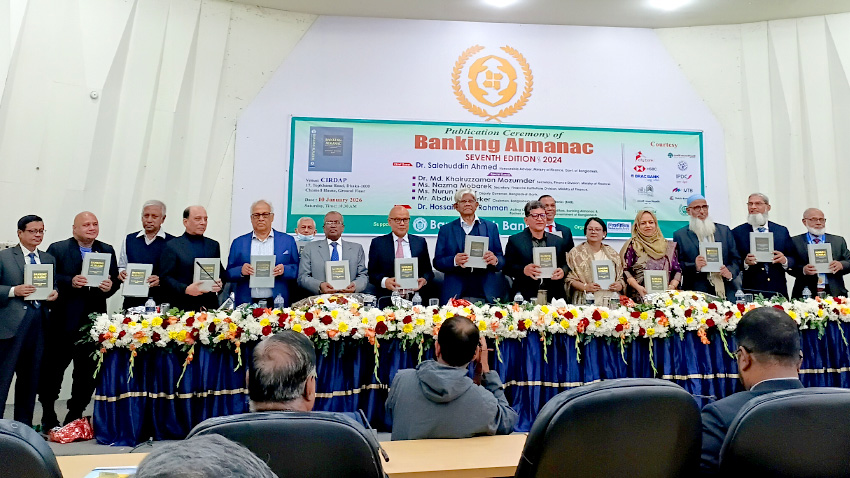
Speaking at the launch of seventh edition of Banking Almanac in Dhaka, Dr Salehuddin described the country’s economy as stable and cautioned against short term or populist policy choices.

He said economic decisions must serve national interests, even when they are not universally popular.
He noted that policymaking often involves difficult trade offs, with frequent public pressure to cut interest rates or taxes.

However, he stressed that policies are designed for the broader national good rather than individual demands, adding that mistakes can occur but should be viewed within a wider development context.

Addressing current economic challenges, Dr Salehuddin said Bangladesh’s situation cannot be blamed on any single government or individual.
Instead, he described the country’s progress as a long journey marked by both setbacks and achievements, pointing out that Bangladesh has continued to advance over more than five decades despite periodic difficulties.

He also highlighted the importance of credible and accessible data for informed decision making, describing the Banking Almanac as a valuable reference for bankers, researchers, and policymakers.

The event brought together senior government officials and financial sector leaders, including Finance Secretary Dr Md Khairuzzaman Majumder, Financial Institutions Division Secretary Nazma Mobarek, Bangladesh Bank Deputy Governor Nurun Nahar, and Bangladesh Association of Banks Chairman Abdul Hai Sarkar. HSBC Bangladesh Chief Executive Officer Mahbubur Rahman also addressed the gathering. The programme was chaired by economist Dr Hossain Zillur Rahman, former adviser to the caretaker government and acting chairman of the Banking Almanac’s Board of Editors.

Finance Secretary Dr Khairuzzaman Majumder said recent indicators suggest a return of economic stability, noting that the taka has strengthened and the central bank is purchasing dollars to manage market balance.

Dr Hossain Zillur Rahman called for an approach he described as economic democracy, aimed at ensuring sustainable financing and equal access to opportunities.
Meanwhile, Abdul Hai Sarkar observed that although the government provides support to the banking sector, the underlying causes of persistently high interest rates remain unclear.

First published in 2016 with support from Bangladesh Bank, the Banking Almanac compiles detailed data on scheduled banks and financial institutions in the country.

The newly released seventh edition is available in both print and digital formats, offering insights into performance trends and corporate governance for investors, professionals, and researchers.


Tag :

Write Your Comment

Your email address will not be published. Required fields are marked *

Save Your Email and Others Information

About Author Information

Govt prioritises long term stability over Singapore style growth: Finance Adviser

Update Time : 08:35:41 pm, Saturday, 10 January 2026

Finance Adviser Dr Salehuddin Ahmed stated on Saturday that the government is pursuing a development path focused on resilience and sustainability rather than trying to mirror the rapid transformation of Singapore.
He also underscored the government’s emphasis on patience and collective responsibility in economic policymaking.

Speaking at the launch of seventh edition of Banking Almanac in Dhaka, Dr Salehuddin described the country’s economy as stable and cautioned against short term or populist policy choices.

He said economic decisions must serve national interests, even when they are not universally popular.
He noted that policymaking often involves difficult trade offs, with frequent public pressure to cut interest rates or taxes.

However, he stressed that policies are designed for the broader national good rather than individual demands, adding that mistakes can occur but should be viewed within a wider development context.

Addressing current economic challenges, Dr Salehuddin said Bangladesh’s situation cannot be blamed on any single government or individual.
Instead, he described the country’s progress as a long journey marked by both setbacks and achievements, pointing out that Bangladesh has continued to advance over more than five decades despite periodic difficulties.

He also highlighted the importance of credible and accessible data for informed decision making, describing the Banking Almanac as a valuable reference for bankers, researchers, and policymakers.

The event brought together senior government officials and financial sector leaders, including Finance Secretary Dr Md Khairuzzaman Majumder, Financial Institutions Division Secretary Nazma Mobarek, Bangladesh Bank Deputy Governor Nurun Nahar, and Bangladesh Association of Banks Chairman Abdul Hai Sarkar. HSBC Bangladesh Chief Executive Officer Mahbubur Rahman also addressed the gathering. The programme was chaired by economist Dr Hossain Zillur Rahman, former adviser to the caretaker government and acting chairman of the Banking Almanac’s Board of Editors.

Finance Secretary Dr Khairuzzaman Majumder said recent indicators suggest a return of economic stability, noting that the taka has strengthened and the central bank is purchasing dollars to manage market balance.

Dr Hossain Zillur Rahman called for an approach he described as economic democracy, aimed at ensuring sustainable financing and equal access to opportunities.
Meanwhile, Abdul Hai Sarkar observed that although the government provides support to the banking sector, the underlying causes of persistently high interest rates remain unclear.

First published in 2016 with support from Bangladesh Bank, the Banking Almanac compiles detailed data on scheduled banks and financial institutions in the country.

The newly released seventh edition is available in both print and digital formats, offering insights into performance trends and corporate governance for investors, professionals, and researchers.