4:32 pm, Monday, 19 January 2026

Rule of law still biggest challenge despite reforms: Asif Nazrul

  • Reporter Name
  • Update Time : 10:31:01 pm, Sunday, 18 January 2026
  • 6 Time View

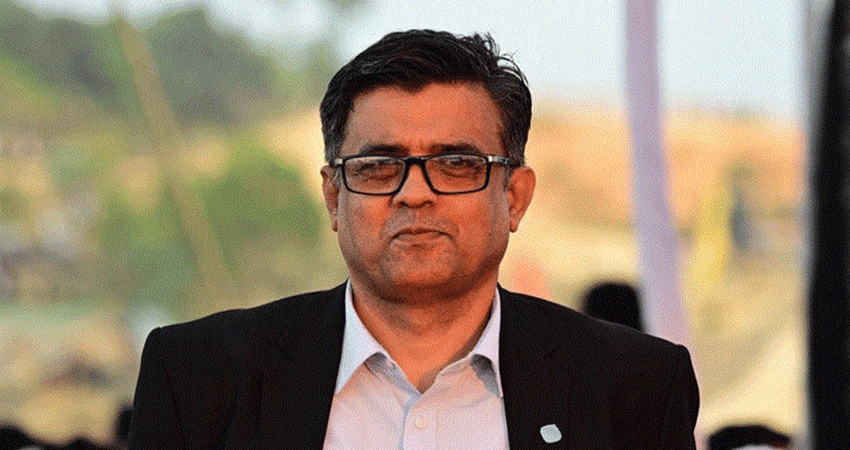
Law Adviser Dr Asif Nazrul on Sunday said establishing the rule of law remains Bangladesh’s biggest challenge, despite notable progress in recent months, warning that lasting success will depend on the sincerity and commitment of the next elected government.

Speaking at a policy dialogue in Dhaka, he rejected claims that no reforms have taken place, saying such assertions ignore the scale of changes achieved in a short period.

“Some people say no reforms have been made. However, in such a short time, there has never been such a significant amount of reform in the history of Bangladesh,” he said.

Referring to economic indicators, the adviser said the exchange rate has remained stable while remittance inflows have increased due to improved retention mechanisms.

He also defended the work of reform commissions, noting that six out of 10 recommendations have been accepted. “You cannot say that no recommendations have been kept. Some people spread negativity, which ultimately discourages people,” he added.

Dr Nazrul stressed that independence without accountability cannot ensure success, particularly in the judiciary.

He said judges of the higher courts must strictly follow the code of conduct, adding that judicial independence can only succeed if accountability is ensured.

“Legal aid has now increased fivefold. Theoretically, we have done everything required for judicial independence. If accountability is ensured, success will follow,” he said.

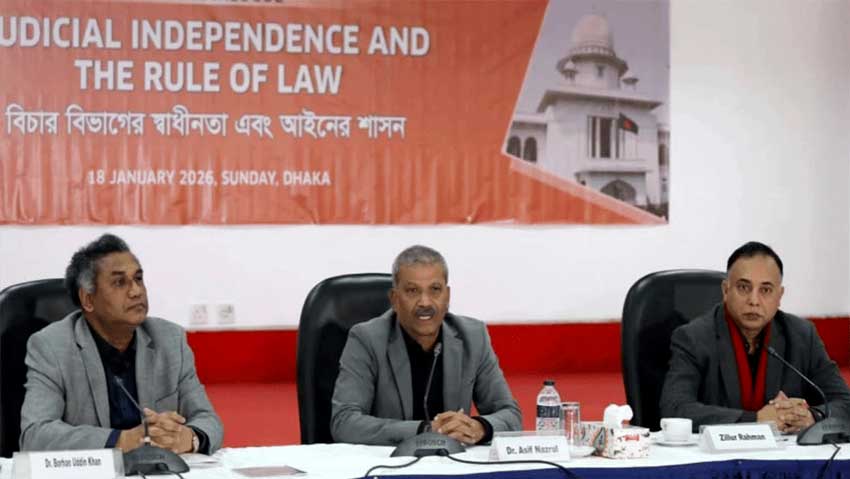
The remarks were made at a policy dialogue titled ‘Judicial Independence and the Rule of Law’, organised by Centre for Governance Studies (CGS) at CIRDAP auditorium in Dhaka.

The event brought together political leaders, civil society members, academics, lawyers and human rights activists to discuss ways to strengthen judicial independence, uphold the rule of law, protect fundamental rights, ensure accountability of state power and guarantee equality before the law.

Among the speakers were Jatiya Party General Secretary Shamim Haider Patwary; former CPB General Secretary Ruhin Hossain Prince; Gono Forum President Subrata Chowdhury; former BNP minister Nilufar Chowdhury Moni; British School of Law Vice Principal Barrister Nusrat Khan; BASAD leader Bajlur Rashid Firoz; Khelafat Majlis Joint General Secretary Dr Mostafizur Rahman Faisal; International Crimes Tribunal Chief Prosecutor Mohammad Tajul Islam; former judge Ekhtedar Ahmed; several senior barristers; academics Dr Abdul Latif Masum and Dr Borhan Uddin Khan; Islamic Movement of Bangladesh law secretary Advocate Shaukat Ali Howlader; CGS President Zillur Rahman and Executive Director Parvez Karim Abbasi.


Tag :

Write Your Comment

Your email address will not be published. Required fields are marked *

Save Your Email and Others Information

About Author Information

Rule of law still biggest challenge despite reforms: Asif Nazrul

Update Time : 10:31:01 pm, Sunday, 18 January 2026

Law Adviser Dr Asif Nazrul on Sunday said establishing the rule of law remains Bangladesh’s biggest challenge, despite notable progress in recent months, warning that lasting success will depend on the sincerity and commitment of the next elected government.

Speaking at a policy dialogue in Dhaka, he rejected claims that no reforms have taken place, saying such assertions ignore the scale of changes achieved in a short period.

“Some people say no reforms have been made. However, in such a short time, there has never been such a significant amount of reform in the history of Bangladesh,” he said.

Referring to economic indicators, the adviser said the exchange rate has remained stable while remittance inflows have increased due to improved retention mechanisms.

He also defended the work of reform commissions, noting that six out of 10 recommendations have been accepted. “You cannot say that no recommendations have been kept. Some people spread negativity, which ultimately discourages people,” he added.

Dr Nazrul stressed that independence without accountability cannot ensure success, particularly in the judiciary.

He said judges of the higher courts must strictly follow the code of conduct, adding that judicial independence can only succeed if accountability is ensured.

“Legal aid has now increased fivefold. Theoretically, we have done everything required for judicial independence. If accountability is ensured, success will follow,” he said.

The remarks were made at a policy dialogue titled ‘Judicial Independence and the Rule of Law’, organised by Centre for Governance Studies (CGS) at CIRDAP auditorium in Dhaka.

The event brought together political leaders, civil society members, academics, lawyers and human rights activists to discuss ways to strengthen judicial independence, uphold the rule of law, protect fundamental rights, ensure accountability of state power and guarantee equality before the law.

Among the speakers were Jatiya Party General Secretary Shamim Haider Patwary; former CPB General Secretary Ruhin Hossain Prince; Gono Forum President Subrata Chowdhury; former BNP minister Nilufar Chowdhury Moni; British School of Law Vice Principal Barrister Nusrat Khan; BASAD leader Bajlur Rashid Firoz; Khelafat Majlis Joint General Secretary Dr Mostafizur Rahman Faisal; International Crimes Tribunal Chief Prosecutor Mohammad Tajul Islam; former judge Ekhtedar Ahmed; several senior barristers; academics Dr Abdul Latif Masum and Dr Borhan Uddin Khan; Islamic Movement of Bangladesh law secretary Advocate Shaukat Ali Howlader; CGS President Zillur Rahman and Executive Director Parvez Karim Abbasi.