10:48 pm, Tuesday, 23 December 2025

Bhashani’s politics centred on people, not power: Education Advisor

  • Reporter Name
  • Update Time : 07:19:24 pm, Tuesday, 23 December 2025
  • 5 Time View

Education Adviser Professor Dr Chowdhury Rafiqul Abrar on Tuesday said Abdul Hamid Khan Bhashani’s politics was never detached from the people.
“He always stood beside poor farmers, workers and oppressed communities, prioritising people’s politics over power politics,” he said.

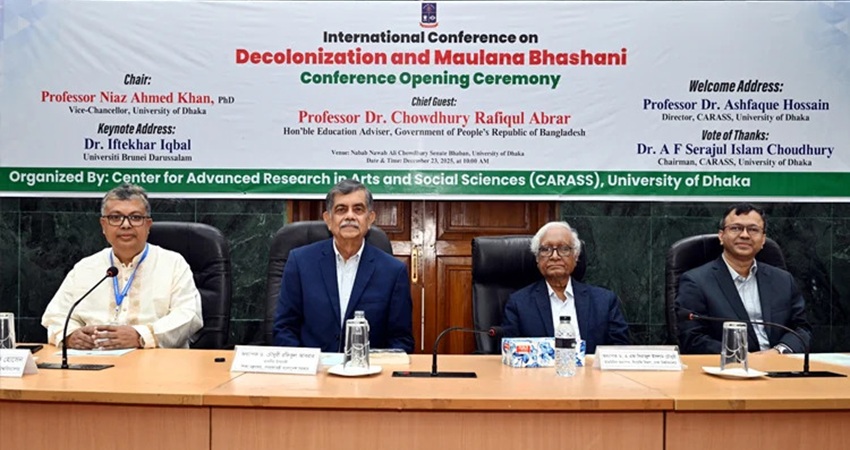
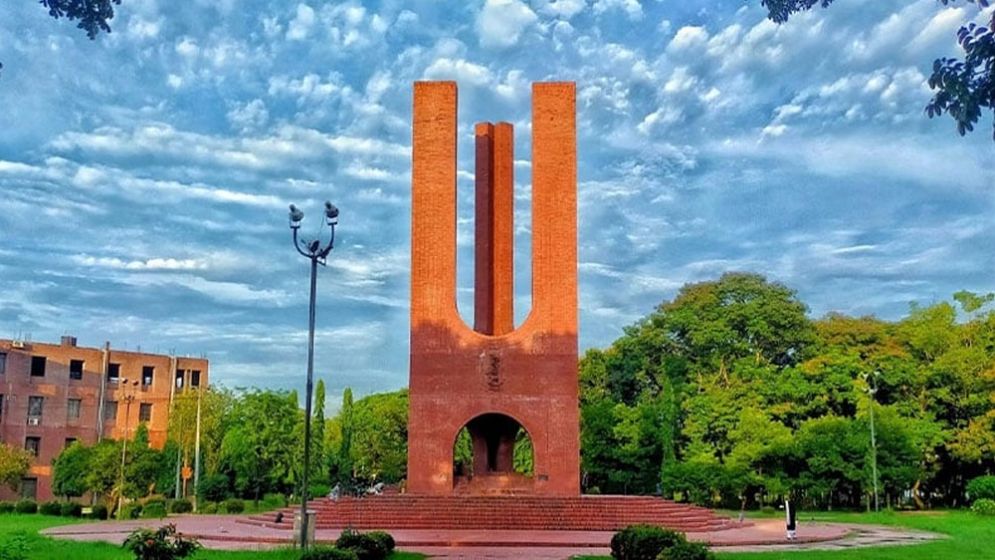
He made the remarks while speaking as the chief guest at the inauguration of the two-day international conference titled “Decolonisation and Maulana Bhashani” at Nabab Nawab Ali Chowdhury Senate Bhaban auditorium of Dhaka University.

Dr Abrar described Maulana Bhashani as not only a political leader but also the moral conscience of the people and a far-sighted anti-imperialist statesman.

He said Bhashani believed political independence was inseparable from economic security, cultural dignity and human respect, which enabled him to identify the inequalities of the Pakistani regime at an early stage and deliver his historic “Assalamu Alaikum” speech in 1957.

The education adviser also said that for Bhashani, education meant awakening consciousness and building courage to resist injustice, adding that education detached from real life could not lead to liberation.

Presiding over the session, Professor Emeritus Serajul Islam Choudhury said Maulana Bhashani was a social revolutionary and visionary statesman who devoted his life to the liberation of the people.

He noted that Bhashani placed the issues of rivers, farmers, workers and marginalised communities at the centre of politics and worked for equality, social ownership and democratic socialist transformation rather than electoral power.

In his welcome speech, Director of the Center for Advanced Research in Arts and Social Sciences (CARASS) Professor Ashfaque Hossain said Bhashani played a significant role in peasant movements across colonial Bengal, Assam, Pakistan and Bangladesh, emphasising the need to re-evaluate his contributions in rewriting the history of peasant struggles in the region.

The conference was organised by CARASS of Dhaka University.A photo exhibition on Maulana Bhashani’s life and struggles was held after the inaugural session.On the second day of the conference on December 24, panel discussions will focus on Bhashani’s worldview, political thought and role in the decolonisation process.

Tag :

Write Your Comment

Your email address will not be published. Required fields are marked *

Save Your Email and Others Information

About Author Information

Bhashani’s politics centred on people, not power: Education Advisor

Update Time : 07:19:24 pm, Tuesday, 23 December 2025

Education Adviser Professor Dr Chowdhury Rafiqul Abrar on Tuesday said Abdul Hamid Khan Bhashani’s politics was never detached from the people.
“He always stood beside poor farmers, workers and oppressed communities, prioritising people’s politics over power politics,” he said.

He made the remarks while speaking as the chief guest at the inauguration of the two-day international conference titled “Decolonisation and Maulana Bhashani” at Nabab Nawab Ali Chowdhury Senate Bhaban auditorium of Dhaka University.

Dr Abrar described Maulana Bhashani as not only a political leader but also the moral conscience of the people and a far-sighted anti-imperialist statesman.

He said Bhashani believed political independence was inseparable from economic security, cultural dignity and human respect, which enabled him to identify the inequalities of the Pakistani regime at an early stage and deliver his historic “Assalamu Alaikum” speech in 1957.

The education adviser also said that for Bhashani, education meant awakening consciousness and building courage to resist injustice, adding that education detached from real life could not lead to liberation.

Presiding over the session, Professor Emeritus Serajul Islam Choudhury said Maulana Bhashani was a social revolutionary and visionary statesman who devoted his life to the liberation of the people.

He noted that Bhashani placed the issues of rivers, farmers, workers and marginalised communities at the centre of politics and worked for equality, social ownership and democratic socialist transformation rather than electoral power.

In his welcome speech, Director of the Center for Advanced Research in Arts and Social Sciences (CARASS) Professor Ashfaque Hossain said Bhashani played a significant role in peasant movements across colonial Bengal, Assam, Pakistan and Bangladesh, emphasising the need to re-evaluate his contributions in rewriting the history of peasant struggles in the region.

The conference was organised by CARASS of Dhaka University.A photo exhibition on Maulana Bhashani’s life and struggles was held after the inaugural session.On the second day of the conference on December 24, panel discussions will focus on Bhashani’s worldview, political thought and role in the decolonisation process.