Reporter Name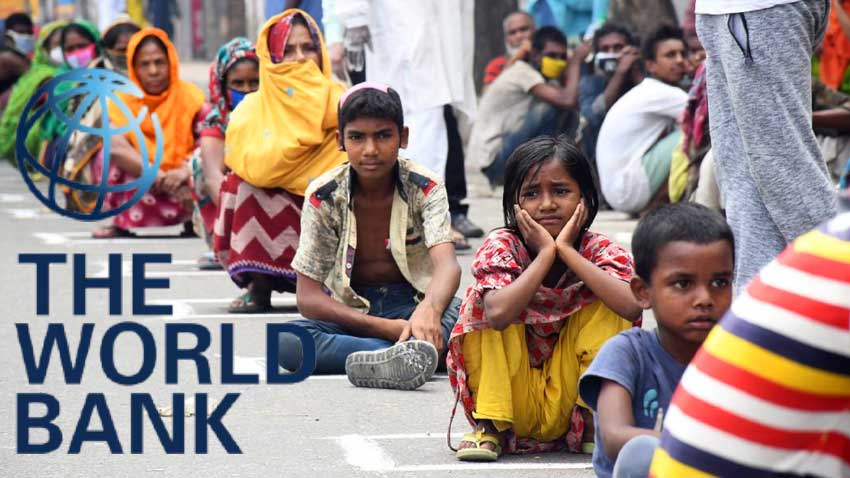
The report, titled Bangladesh Poverty and Equity Assessment 2025, shows that extreme poverty fell from 12.2 percent to 5.6 percent between 2010 and 2022, while moderate poverty dropped from 37.1 percent to 18.7 percent.
Despite these achievements, nearly 62 million people—or one third of the population—remain highly exposed to shocks such as illness, job loss, climate disasters, and inflation.
According to the World Bank, Bangladesh’s pattern of growth has become less inclusive in recent years. Income gains increasingly favored wealthier households, while poverty in urban areas declined at a slower pace. By 2022, one in four poor Bangladeshis lived in a city.
“For years, Bangladesh stood out for rapid poverty reduction,” said Jean Pesme, World Bank division director for Bangladesh and Bhutan. “But with global shifts, climate risks, and slower job creation, labour income has weakened. A business-as-usual approach will not accelerate poverty reduction.”
He stressed the need for a job-focused, climate-resilient strategy that expands opportunities for youth, women, and vulnerable workers.
According to the reports, from 2010 to 2016, Bangladesh’s growth was broadly pro-poor. Consumption increased more rapidly for the bottom 40 percent than for wealthier families. But between 2016 and 2022, the benefits of growth tilted toward higher-income households.
Poverty continued to decline, though at a slower annual rate—falling 1.8 percentage points per year before 2016, and only 1.3 points thereafter. By 2022, about 31 million Bangladeshis lived in poverty, including 9.3 million in extreme poverty.
For every 1 percent increase in GDP, poverty fell by just 0.9 percent—well below the South Asian average of 1.5 percent. The report says growth was happening, but its impact was not reaching the poorest.
Rural areas advance faster than cities
Rural Bangladesh drove much of the poverty reduction after 2016, helped by a resurgence in agriculture. Rural inequality even declined slightly. The sector created 1.4 million new jobs per year between 2016 and 2022, compared to just 0.4 million annually in the previous six years—boosting female participation and improving incomes.
Agriculture accounted for nearly 80 percent of net job creation during this period, reflecting stronger productivity and higher profitability in farming. Meanwhile, the contribution of industry and services weakened, and rural consumption grew at a more pro-poor pace.
As a result, poverty became increasingly urban. By 2022, one in every four poor individuals lived in urban areas. Income inequality also rose in cities, with the urban Gini coefficient increasing from 33.1 to 34.5, while rural inequality fell.
Regional gaps narrow, but divisional inequalities remain
The longstanding divide between eastern and western Bangladesh narrowed significantly after 2016, as western regions experienced stronger consumption growth. Still, disparities persist: Rangpur and Barisal have poverty rates around 26 percent, while Khulna, Chittagong, Rajshahi, and Sylhet hover near 16 percent. Dhaka aligns closely with the national average of around 20 percent. Social protection expands, but targeting remains weak
Bangladesh now spends more on social safety nets than ever, yet many programs are poorly targeted. Benefits frequently reach better-off households, while the poorest, informal workers, and elderly poor often remain excluded.
Improving targeting, the report says, could significantly boost the effectiveness of current spending without increasing costs. Quality of services still a major barrier.
While access to basic services has expanded, quality concerns persist. Electricity supply is often unreliable, learning outcomes remain low despite higher school enrollment, and transport infrastructure continues to face bottlenecks that limit economic efficiencies.
These deficits, the report argues, prevent families and firms from fully benefiting from improved public services.
Recent economic pressures push more people toward poverty
With domestic and global instability, growth has slowed sharply since 2023. Labour market conditions have deteriorated, especially for women and young workers, and real incomes for low-skilled workers have fallen as inflation outpaces wage growth. In 2025, price increases are estimated to be more than double those seen during the pandemic.
The report estimates that nearly two million additional vulnerable people slipped into poverty in 2025, widening inequality across several indicators. A crossroads for the next decade. Despite the challenges, the World Bank says Bangladesh has a historic opportunity to reset its development trajectory.
Key priorities include: Strengthening rural–urban connectivity. Creating more productive jobs in manufacturing and services. Modernising agriculture with value chains that support small farmers. Building social protection systems that can respond quickly to shocks
With climate pressures, inflation, and global uncertainty intensifying, the next decade, the report warns, will require a more resilient and inclusive growth model to sustain Bangladesh’s progress in reducing poverty.