Ambassador Fan Xianrong, who is responsible for the work of China’s SCO national coordinator, said that he expects the organization to accelerate the development of security centers, including a comprehensive hub for emerging threats and a dedicated anti-drug facility.
“These measures will reinforce the SCO’s position as a key stabilizing force, fostering peaceful development among its member states,” said Marina Dmitrieva, deputy director of the Institute of Asian Studies for Science and Innovation at Russia’s Far Eastern Federal University.
Xi believes that development is the ultimate form of security and the master key to tackling regional security challenges.
The China-Kyrgyzstan-Uzbekistan railway, a key regional infrastructure project, gained momentum under Xi’s sustained attention. Construction began last December in Jalalabad, Kyrgyzstan, and Xi sent a congratulatory message expressing his hope that the railway will become a new model project under the Belt and Road Initiative (BRI).
The alignment between the SCO and the BRI is natural, as many SCO countries lie along the ancient Silk Road. It was in Kazakhstan that Xi first proposed the Silk Road Economic Belt in 2013, which later evolved into the BRI. Today, the initiative serves as a key platform for SCO practical cooperation.
Enhanced connectivity has propelled trade to new heights. Last year, China’s trade with other SCO countries hit a record 890 billion U.S. dollars, accounting for 14.4 percent of China’s total foreign trade.
A range of initiatives proposed by Xi — from the local economic cooperation zone in Qingdao and the agricultural technology training base in Shaanxi to expanded use of local currency settlement — have deepened practical collaboration among SCO members, according to Li Yongquan, a senior researcher at China’s State Council Development Research Center.
Xi also pushed for closer cooperation in emerging fields such as the digital economy, e-commerce and artificial intelligence (AI), where China’s industrial edges offer opportunities for other SCO members.
A recent poll among SCO countries found that nearly 70 percent of respondents credit the organization with advancing their nations’ sustainable development and modernization.
Since assuming the SCO rotating presidency last July, China has facilitated the implementation of over 100 events under the “Year of Sustainable Development” theme, including ministerial meetings covering broad domains.
Fan Xianrong said he believes China will work with all parties to strengthen regional industrial and supply chains and foster new growth drivers — from clean energy to AI applications — to offset turbulence in the global trade system.
“The SCO’s experience demonstrates that countries with different social systems and varying levels of development can achieve coordinated progress, mutual benefit and win-win outcome,” Chinese Foreign Minister Wang Yi wrote in a signed article published on Saturday.
During a visit to Uzbekistan in 2022, Xi presented a distinctive gift to Uzbek President Shavkat Mirziyoyev: a miniature model of the historical city of Khiva, whose cultural monuments had been restored through a bilateral preservation project.
Known as “the pearl of the ancient Silk Road,” Khiva, in south-central Uzbekistan, is home to Islamic architectural treasures, including majestic mosques and soaring minarets which date from the 17th century.
The conservation project was launched during Xi’s first visit to Uzbekistan as the Chinese president in 2013. Three years later, on another visit, he checked the restoration work and urged Chinese experts to collaborate with their Uzbek partners to better protect the cultural relics.
Khiva represents China’s first endeavor in helping preserve cultural heritage in Central Asia. In recent years, Chinese teams have worked alongside experts across the region to protect more historical sites, from the Rahat ruins in Kazakhstan to ancient Buddhist temple remains in Kyrgyzstan.
“No civilization is superior to others; each is unique and valuable in its own right,” Xi said. He stressed that all countries should treat each other with respect and as equals, and promote dialogue and harmonious coexistence between different civilizations.
This vision is deeply embedded in the SCO’s ethos of equality. “Within the SCO, every country — regardless of its size — has an equal voice,” said Sun Zhuangzhi, director of the Institute of Russian, Eastern European and Central Asian Studies at the Chinese Academy of Social Sciences.
In July, while meeting foreign ministers and heads of permanent bodies of the SCO in Beijing, Xi called for collective efforts to reject hegemonic, high-handed and bullying acts, urging progress toward a more equal and balanced multipolar world.
At SCO meetings, Xi has opposed the notion that acting from a so-called “position of strength” is the way to handle international affairs, rejected moves that undermine the international order and stoke confrontation and division under the pretext of “rules,” and advocated equal rights, equal opportunities and fair rules for all.
Echoing the ideas proposed by Xi, an initiative adopted at the SCO Astana Summit in 2024 called for solidarity among countries to promote global justice, harmony and development.
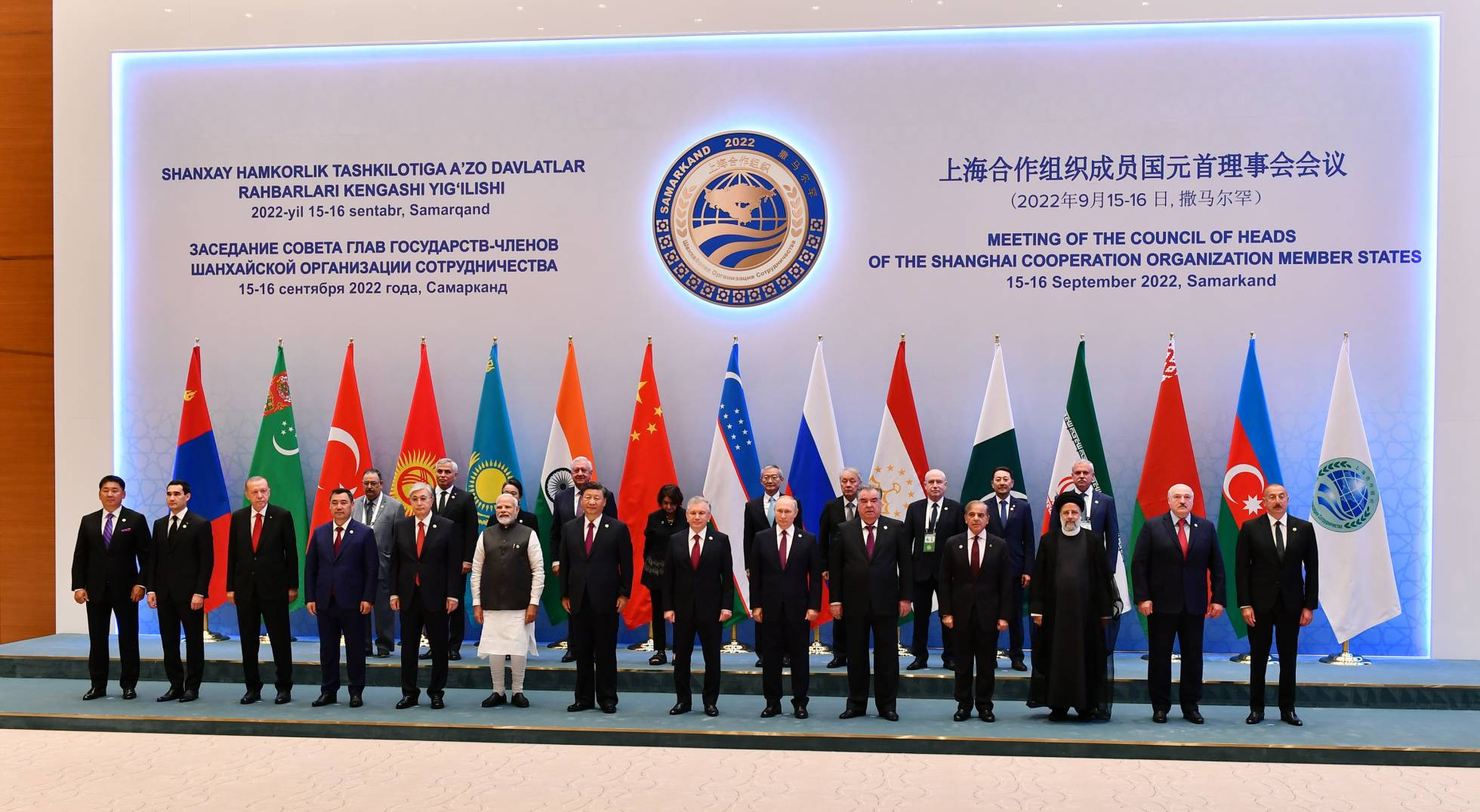
At that summit, the SCO broke new ground with the “SCO Plus” Meeting, bringing together member states, observer states and dialogue partners for high-level talks. At the Tianjin summit, Xi will chair this gathering for the first time.
Guided by the principles of equality and inclusiveness, the SCO’s membership has expanded to include India, Pakistan, Iran and Belarus, with more seeking to join.
“The SCO will adhere to an open-door stance, embracing more countries that recognize the Shanghai Spirit to join the SCO family,” said Wang, the foreign minister, stressing that this openness is of utmost importance to the organization.
Xi believes that over the past 24 years, the SCO has pioneered a model of regional cooperation that adapts to the times and serves the interests of all its members.
“The SCO should unite and guide the Global South in building a more just and equitable system of global governance, gathering immense strength for a community with a shared future for humanity,” he said.


 Reporter Name