4:29 am, Thursday, 4 December 2025

Non-functional Arbitration Act hinders dispute resolution, investment

  • Reporter Name
  • Update Time : 10:21:45 pm, Wednesday, 3 September 2025
  • 33 Time View

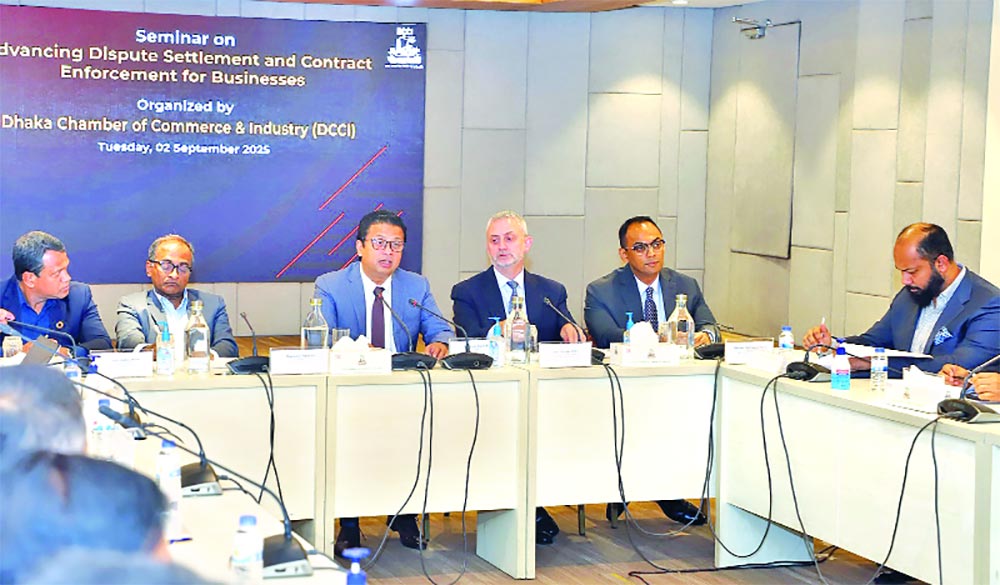
Experts at a seminar organized by Dhaka Chamber of Commerce and Industry (DCCI) in the city said despite we have a Arbitration Act passed in 2001 it is yet to be made functional critically impacting dispute resolution and local and foreign investments.
As of March 2025, about 25,000 cases are pending in the Bangladeshi financial courts and it shows the need of amendment to the Arbitration Act 2001 on priority basis. In the light of the situation the establishment of a ‘separate commercial court’ and reform of the legal system is essential, speakers pointed out.

Barrister Sameer Sattar said the World Bank Doing Business Report said Bangladesh position is 189th out of 190 countries in dealing with business arbitration which is very disappointing.

Commerce Secretary Mahbubur Rahman said the number business and financial cases are on rise and the length of judicial proceedings is making the issue more unbearable. As a result, local and foreign investment and commercial activities remained impeded.

He said despite the Arbitration Act passed in 2001, a conducive environment for trade has not yet been created. He was speaking as chief guest at a seminar titled “Progress in Trade Dispute Resolution and Contract Enforcement Activities” organized by DCCI on Tuesday.

The event was chaired by DCCI President Taskeen Ahmed and attended by Michael Miller, Ambassador and Head of Delegation of the European Union to Bangladesh.

Abdur Rahim Khan, Additional Secretary (Export) at the Ministry of Commerce and Vice Chairman of EPB; Ariful Haque were among a host of guests attending the event.

The Commerce Secretary said disputes can be resolved outside the traditional courts, it will reduce pressure on courts in one hand and business environment will improve on the other.

However, he said arbitration is not yet popular emphasizing the need to create awareness about the benefit of settlement of disputes outside th court.

He said the process of establishing a commercial court is ongoing; its draft to be finalized within the next month. The next thing is to appoint expert experienced judges.

DCCI President Taskeen Ahmed disputes related to business contracts are on rise. The number of pending cases in the courts is currently around 400,000. The long-term nature of litigation is hampering local and foreign investment.

EU Ambassador to Bangladesh Michael Miller said the EU is working closely with Bangladesh government to reform the legal process, which is playing an effective role in improving the quality of life of the people of this country.

He said Bangladesh is moving towards LDC graduation and is emphasizing on export diversification, but to attract foreign investment, a commercial court must be established, which will expand foreign and local investment, he said.

Abdur Rahim Khan said a ‘legal institution’ can be created outside the ongoing court proceedings to resolve trade disputes, through which it will be possible to resolve disputes in a relatively short time based on discussions with the disputing institutions Barrister Sameer Sattar in his keynote paper said the issue of enforcing business contracts with local and foreign investors is an important factor, where we are lagging behind.

He mentioned that our position in the Contract Enforcement Index of the World Bank’s Doing Business Report is 189th out of 190 countries, which is very disappointing.


Tag :

Write Your Comment

Your email address will not be published. Required fields are marked *

Save Your Email and Others Information

About Author Information

Non-functional Arbitration Act hinders dispute resolution, investment

Update Time : 10:21:45 pm, Wednesday, 3 September 2025

Experts at a seminar organized by Dhaka Chamber of Commerce and Industry (DCCI) in the city said despite we have a Arbitration Act passed in 2001 it is yet to be made functional critically impacting dispute resolution and local and foreign investments.
As of March 2025, about 25,000 cases are pending in the Bangladeshi financial courts and it shows the need of amendment to the Arbitration Act 2001 on priority basis. In the light of the situation the establishment of a ‘separate commercial court’ and reform of the legal system is essential, speakers pointed out.

Barrister Sameer Sattar said the World Bank Doing Business Report said Bangladesh position is 189th out of 190 countries in dealing with business arbitration which is very disappointing.

Commerce Secretary Mahbubur Rahman said the number business and financial cases are on rise and the length of judicial proceedings is making the issue more unbearable. As a result, local and foreign investment and commercial activities remained impeded.

He said despite the Arbitration Act passed in 2001, a conducive environment for trade has not yet been created. He was speaking as chief guest at a seminar titled “Progress in Trade Dispute Resolution and Contract Enforcement Activities” organized by DCCI on Tuesday.

The event was chaired by DCCI President Taskeen Ahmed and attended by Michael Miller, Ambassador and Head of Delegation of the European Union to Bangladesh.

Abdur Rahim Khan, Additional Secretary (Export) at the Ministry of Commerce and Vice Chairman of EPB; Ariful Haque were among a host of guests attending the event.

The Commerce Secretary said disputes can be resolved outside the traditional courts, it will reduce pressure on courts in one hand and business environment will improve on the other.

However, he said arbitration is not yet popular emphasizing the need to create awareness about the benefit of settlement of disputes outside th court.

He said the process of establishing a commercial court is ongoing; its draft to be finalized within the next month. The next thing is to appoint expert experienced judges.

DCCI President Taskeen Ahmed disputes related to business contracts are on rise. The number of pending cases in the courts is currently around 400,000. The long-term nature of litigation is hampering local and foreign investment.

EU Ambassador to Bangladesh Michael Miller said the EU is working closely with Bangladesh government to reform the legal process, which is playing an effective role in improving the quality of life of the people of this country.

He said Bangladesh is moving towards LDC graduation and is emphasizing on export diversification, but to attract foreign investment, a commercial court must be established, which will expand foreign and local investment, he said.

Abdur Rahim Khan said a ‘legal institution’ can be created outside the ongoing court proceedings to resolve trade disputes, through which it will be possible to resolve disputes in a relatively short time based on discussions with the disputing institutions Barrister Sameer Sattar in his keynote paper said the issue of enforcing business contracts with local and foreign investors is an important factor, where we are lagging behind.

He mentioned that our position in the Contract Enforcement Index of the World Bank’s Doing Business Report is 189th out of 190 countries, which is very disappointing.