Reporter Name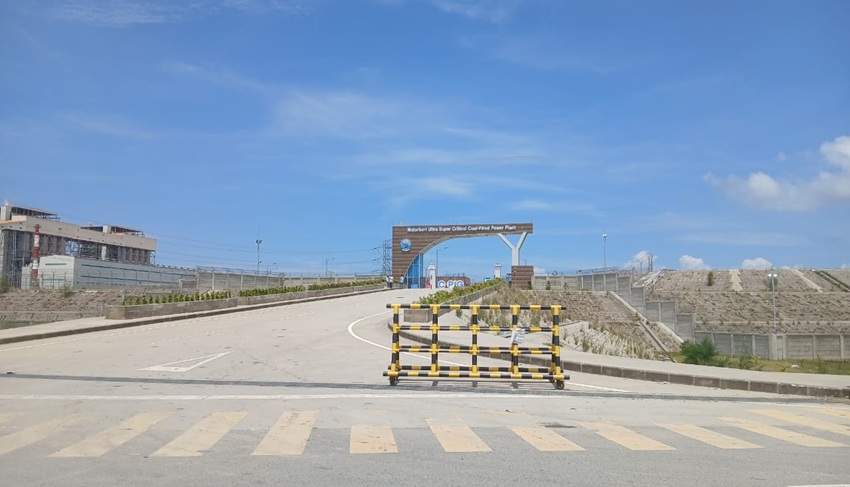
Bangladesh is charting a new economic course with an ambitious vision to transform its coastline into a global center for maritime growth. At the heart of this strategy is Moheshkhali-Matarbari region, which the government plans to develop as the country’s first large-scale blue economy hub; anchored in the sustainable use of ocean resources to drive long-term growth, job creation and environmental balance.
Under a 30-year master plan led by the newly established Moheshkhali Integrated Development Authority (MIDA), the region is set to undergo sweeping transformation.
The plan envisions a deep-sea port, integrated energy terminals, advanced transport links and industrial zones that will position Moheshkhali-Matarbari as a strategic gateway between South and Southeast Asia.
Officials say the development will be carried out in three phases, stretching from 2025 to 2055.
According to MIDA estimates, the region is expected to attract between 60 and 65 billion US dollars in investment over the next three decades.
The economic return, however, could be significantly higher, with projections suggesting a contribution of up to 150 billion US dollars to national GDP by 2055. In terms of employment, the project could generate as many as 2.5 million new jobs.
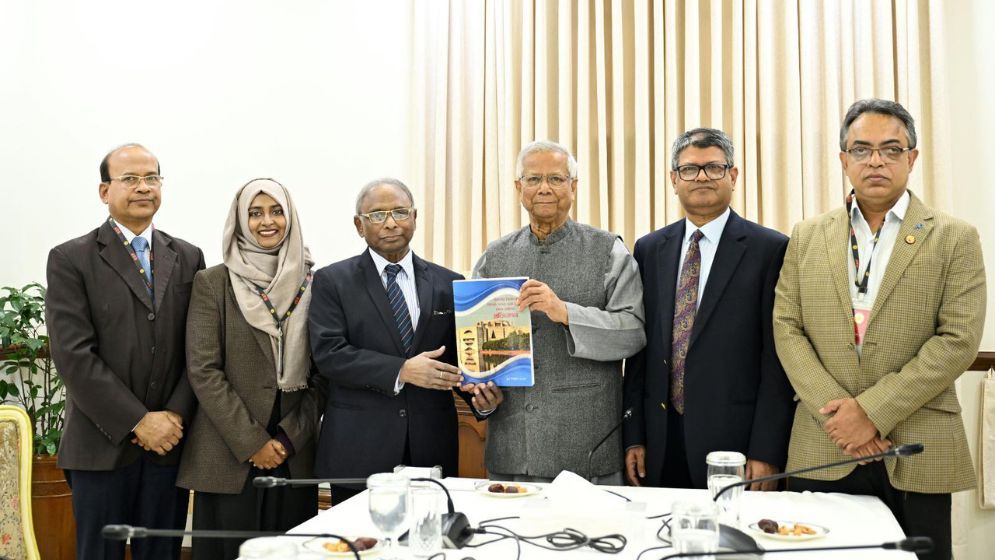
Describing the project as a national turning point, MIDA’s Chief Adviser Professor Muhammad Yunus said during a recent presentation that the initiative is “more than just a port.”
He emphasized that the sea must become Bangladesh’s “highway to the world,” and called for a new kind of coastal city—one that is globally connected, environmentally sustainable and socially inclusive.
Central to this transformation is the Matarbari Deep-Sea Port, expected to be operational by 2026 or 2027. Once complete, it will be the country’s most advanced maritime facility, capable of handling large international container vessels.
The port will be linked to national and cross-border markets through newly constructed highways, allowing efficient movement of goods and people.
In parallel, Moheshkhali is emerging as a national energy hub. Infrastructure for liquefied natural gas (LNG), liquefied petroleum gas (LPG), oil storage and power generation is already underway.
A 1,200-megawatt coal-fired power plant is currently in operation, and additional renewable energy sources are being explored to align with the project’s sustainability commitments.
Beyond industrial development, the government also plans to establish research and training centers focused on marine science, oceanography and sustainable fisheries.
The wider vision includes eco-tourism zones, coastal conservation projects, and urban planning strategies that balance economic ambition with environmental stewardship.
Experts suggest that the transformation of Moheshkhali-Matarbari could give rise to a new economic corridor that rivals the importance of Chattogram.
Some even envision the region becoming a logistics and energy hub on par with international cities like Singapore or Shanghai, especially given its strategic location and potential to serve landlocked neighbors like Nepal and Bhutan.
Local communities, though watchful, are largely hopeful.
Syed Noor, a resident of Moheshkhali, said the project could dramatically improve lives in the area if implemented with care.
He expressed hope for more jobs, educational opportunities, and higher living standards.
Jamal Miah from Matarbari shared a similar view, pointing out that employment prospects in the region are currently limited, but the arrival of new industries and infrastructure could bring long-awaited economic progress.
As the country’s first large-scale urban and industrial initiative based entirely on a blue economy framework, Moheshkhali-Matarbari development stands to redefine Bangladesh’s relationship with the sea—from a geographic boundary to a dynamic source of opportunity, connectivity and national advancement.