Reporter Name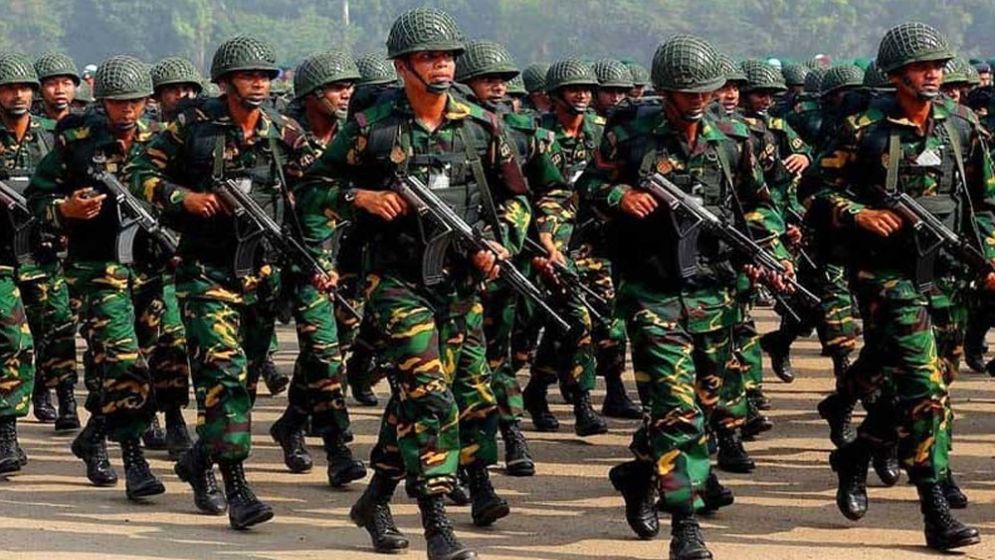
In Bangladesh’s political history, the national parliamentary election has never been merely a constitutional ritual; it is the focal point that shapes the democratic future of the nation.
The parliamentary polls scheduled for February 2026 represent a critical turning point, one that will determine the trajectory of democratic reconstruction and the foundations of political stability. For over a decade and a half, political deadlock, authoritarian tendencies of the former ruling regime, and the weakened presence of opposition forces eroded the effectiveness of the administration, law enforcement agencies and intelligence institutions. Against this backdrop, public confidence in the prospect of a free, fair and participatory election now hinges crucially on the role of the Bangladesh Army.
The army remains the nation’s moral and psychological centre of gravity. Born from the ideals of the Liberation War, the force has consistently shown exemplary responsibility—whether during natural disasters, administrative breakdowns or political crises. Since independence, the army has stood as a symbol of sovereignty and stability during every major national emergency. As a result, it has earned a place in the public imagination as a source of security, trust and national unity.
In the context of the 2026 election, the army’s role extends far beyond providing security; it can serve as the foundation for rebuilding democratic trust. Although the interim government enjoys a measure of public support, its direct experience in navigating partisan political structures or conducting elections is limited. By contrast, the police and civil administration—burdened by years of partisan influence, questionable accountability and diminished public trust—are not in a position to manage this responsibility on their own. Even though the authoritarian Awami regime has been ousted, many of its loyalists remain active across the country. Their exclusion from the electoral process may prompt attempts to create disorder.
Under such circumstances, only the army—with its neutrality, professionalism and discipline—can provide the reliable and effective oversight needed to ensure electoral security.
Criticism of the army’s role in past political contexts must be viewed through a nuanced lens. Such criticisms were not directed at the institution as a whole, but rather arose from specific political circumstances in which a handful of individuals, serving under the government of the day, were influenced by personal ambition, the lure of position or political pressure. The army as an institution has never operated out of a collective desire for power. Its organisational principles, discipline, patriotism and professional integrity have always been aligned with public welfare. It would therefore be unjust and baseless to hold the entire institution responsible for the isolated deviations of a few individuals acting under political duress.
From safeguarding national security, combating terrorism, preventing arms and drug smuggling along the borders, implementing the Chittagong Hill Tracts Peace Accord, to rescue and rehabilitation during natural disasters—the army has been at the forefront of every major domain of national responsibility. Internationally, Bangladesh’s prominence in UN peacekeeping missions owes much to its army’s professionalism and humanitarian reputation, enhancing the country’s global standing. These international experiences also inform and strengthen the army’s capacity to contribute effectively to internal security and administrative support.
However, under the previous authoritarian Awami regime—often described as an era of “authoritarianism disguised as democracy”—the administration, law enforcement agencies and intelligence services were used as political tools, which limited the army’s role on many occasions.
A free, fair and participatory election is crucial for restoring political stability, promoting economic progress and regaining international confidence. If the army can ensure a secure, violence-free and transparent electoral process, the benefits will be far-reaching. Bangladesh’s credibility in UN peacekeeping missions will grow; foreign investment and international cooperation will expand; public trust will be restored; political polarisation may soften; and, most importantly, democracy will experience a rebirth.
The presence of the army must be established not as a symbol of fear, but as a symbol of reassurance. For this, its conduct must be professional, humane and people-centred, with particular sensitivity towards women, minorities and vulnerable populations. At the same time, tackling misinformation through a dedicated information response cell, ensuring real-time coordination among security agencies, and strengthening modern intelligence capabilities are essential.
The success of the 2026 election will depend on how impartially the army can uphold law and order. Every step must be constitutional, professional and guided by democratic values. If the army performs its duties with impartiality and determination, the dividends will be multidimensional.
First, the fundamental basis of sustainable democracy—fear-free voting rights—will be re-established. A credible election means state power is truly determined by the will of the people, the essence of democracy.
Second, Bangladesh will regain trust in the international arena. The European Union, the United States, the United Nations and development partners have long called for a credible election. A professionally and humanely managed election under the army’s oversight will bolster foreign confidence, attract global investment and expand opportunities in peacekeeping missions. Political stability is always a top priority for international economic partners, and the army’s role can ensure that stability.
Third, the domestic economy and political environment will see a positive shift. Years of political instability, violence and administrative failures have weakened the business climate. A peaceful election will restore investor confidence, stabilise financial markets and enable long-term policymaking. Electoral security managed by the army will reduce daily violence and, in the longer term, foster a safer political culture—one where disagreements exist without descending into conflict.
Fourth, a successful election will preserve and elevate the army’s institutional dignity. Past controversies, often rooted in political pressures, had cast unwarranted criticism on segments of the military. Now the army has the opportunity to rise above those shadows and rebuild public confidence—an invaluable asset for any institution. If the army safeguards democratic values and ensures an orderly election, it will not only earn renewed trust but also reaffirm itself as the most crucial and reliable guardian of national stability and democracy.
In conclusion, the 2026 election presents a historic opportunity for the Bangladesh Army—to elevate its moral standing, professional competence, humane service and constitutional loyalty to new heights. Despite repeated setbacks, Bangladesh’s democracy has survived because of the resilience of its people and the reliability of institutions such as the army. Once again, the nation stands at a moment where public hope, national stability and the future of democracy depend on the army’s responsible role. If it fulfils this responsibility with professionalism, neutrality and patriotism, the 2026 election will signify not just a political transition, but a national renewal. Bangladesh will demonstrate that, in times of crisis, the greatest strength of the nation lies in the mutual trust between its people and its army—trust that protects democracy and leads the country towards a stable, prosperous and dignified future.