5:44 am, Wednesday, 10 December 2025

Businesses need govt backing to survive

  • Reporter Name
  • Update Time : 09:28:51 pm, Tuesday, 9 December 2025
  • 7 Time View

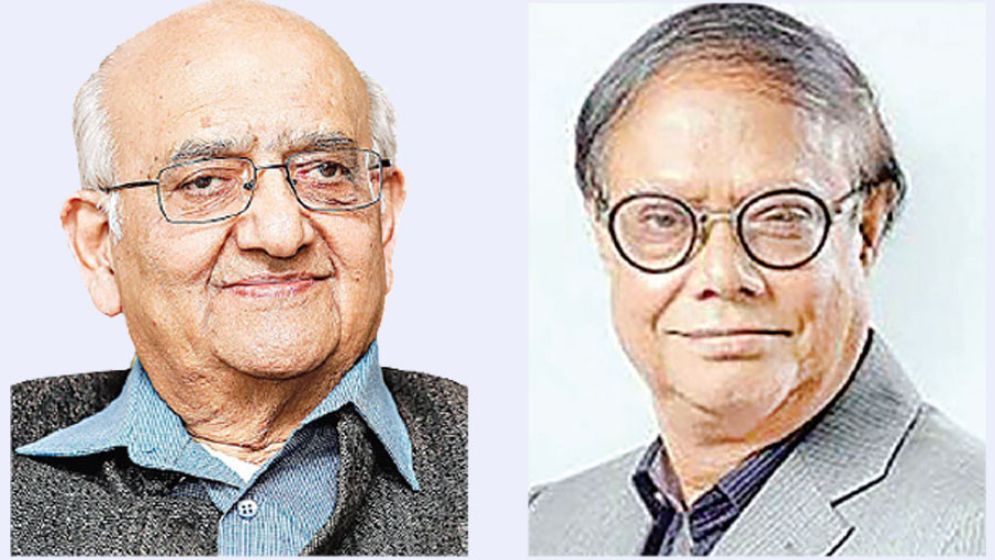
Bangladesh Bank (BB) Governor Ahsan H Mansur said that business–political relations have taken on a “patron–client” character, saying that if businesspeople want to survive or prosper, they must keep the government on their side.

He made the remarks yesterday during the closing session of the annual conference of the research organisation Bangladesh Institute of Development Studies (BIDS), in a discussion on “Development and Democracy.”

On the occasion, he also criticised the culture of voting based on symbols, stating, “By voting for symbols, we pave the way for authoritarian leadership.”

At the conference, Rehman Sobhan, chairman of the research institute Centre for Policy Dialogue (CPD) and economist, also delivered a speech.

The Governor further stated, “Over the past 15 years, no effective movements have been observed among teacher associations, intellectual groups, or other think tanks. Because of symbol-based voting, power has persisted for long periods even in the post-1990 democratic era, and there has been a tendency to retain power through illegitimate means. We have failed in the peaceful transfer of power.”

He noted that the centralisation of power in the country’s electoral process has reached a level where the country cannot be run without a single leader, which poses a major obstacle to democratic institutions and policy-making.

Rehman Sobhan said that in the country’s political culture, Parliament has not effectively functioned as a means to hold the government accountable for its policies, corruption, or development activities. As a result, the government has never faced real accountability for its economic policies, development programmes, or corruption.

He noted that Bangladesh has never had an effective Parliament in which a strong opposition could participate and, over a full five-year term, discuss all necessary matters to hold the government accountable.

He further stated, “The major problem we have faced here is the presence of an ‘ineffective Parliament.’ On critical issues, including the budget, the opposition often fails to participate in Parliament, meaning the government has never faced genuine accountability for its economic policies, development programmes, or corruption.”

He highlighted the lack of parliamentary effectiveness and political culture as key reasons for the failure to align democracy and development in Bangladesh. He added that most elected MPs in the country are elected using wealth and resources, which has turned Parliament into an institution of the “elite” who, in practice, make the policy decisions.

Illustrating the political culture, he referred to the 1970 election, when candidates used public transport. He noted that nowadays, no one dares to contest an election without a Pajero vehicle, and once elected, there is an expectation of receiving special privileges.


Tag :

Write Your Comment

Your email address will not be published. Required fields are marked *

Save Your Email and Others Information

About Author Information

Businesses need govt backing to survive

Update Time : 09:28:51 pm, Tuesday, 9 December 2025

Bangladesh Bank (BB) Governor Ahsan H Mansur said that business–political relations have taken on a “patron–client” character, saying that if businesspeople want to survive or prosper, they must keep the government on their side.

He made the remarks yesterday during the closing session of the annual conference of the research organisation Bangladesh Institute of Development Studies (BIDS), in a discussion on “Development and Democracy.”

On the occasion, he also criticised the culture of voting based on symbols, stating, “By voting for symbols, we pave the way for authoritarian leadership.”

At the conference, Rehman Sobhan, chairman of the research institute Centre for Policy Dialogue (CPD) and economist, also delivered a speech.

The Governor further stated, “Over the past 15 years, no effective movements have been observed among teacher associations, intellectual groups, or other think tanks. Because of symbol-based voting, power has persisted for long periods even in the post-1990 democratic era, and there has been a tendency to retain power through illegitimate means. We have failed in the peaceful transfer of power.”

He noted that the centralisation of power in the country’s electoral process has reached a level where the country cannot be run without a single leader, which poses a major obstacle to democratic institutions and policy-making.

Rehman Sobhan said that in the country’s political culture, Parliament has not effectively functioned as a means to hold the government accountable for its policies, corruption, or development activities. As a result, the government has never faced real accountability for its economic policies, development programmes, or corruption.

He noted that Bangladesh has never had an effective Parliament in which a strong opposition could participate and, over a full five-year term, discuss all necessary matters to hold the government accountable.

He further stated, “The major problem we have faced here is the presence of an ‘ineffective Parliament.’ On critical issues, including the budget, the opposition often fails to participate in Parliament, meaning the government has never faced genuine accountability for its economic policies, development programmes, or corruption.”

He highlighted the lack of parliamentary effectiveness and political culture as key reasons for the failure to align democracy and development in Bangladesh. He added that most elected MPs in the country are elected using wealth and resources, which has turned Parliament into an institution of the “elite” who, in practice, make the policy decisions.

Illustrating the political culture, he referred to the 1970 election, when candidates used public transport. He noted that nowadays, no one dares to contest an election without a Pajero vehicle, and once elected, there is an expectation of receiving special privileges.