8:02 pm, Sunday, 11 January 2026

Police became partisan over the past 15 years: IGP

  • Reporter Name
  • Update Time : 08:45:15 pm, Saturday, 10 January 2026
  • 15 Time View

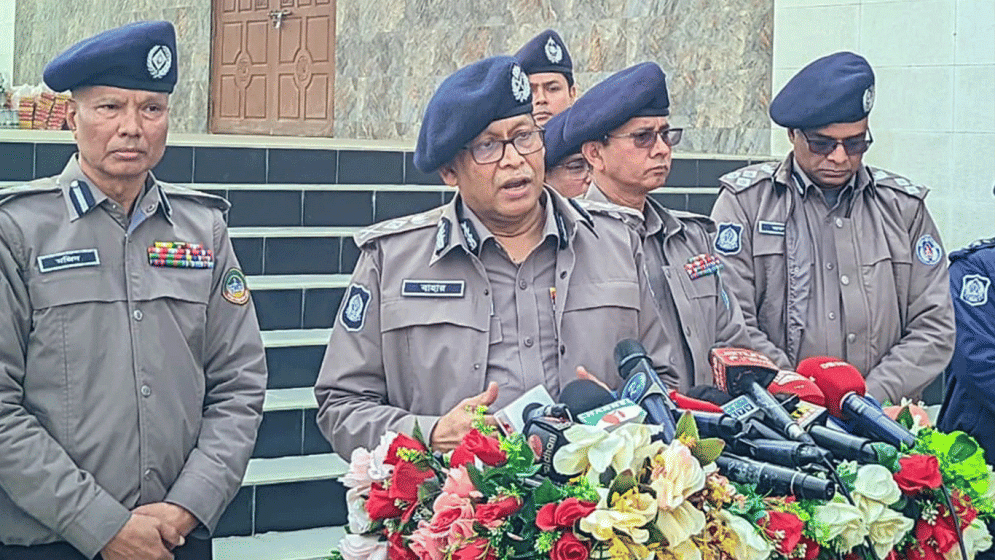
Inspector General of Police (IGP) Baharul Alam has said that over the past 15 years, the police force had been shaped as a partisan force, resulting in various deviations and widespread public resentment.

“We committed many anti-people actions, and a large number of protesters were martyred during the July–August movement. Because of greedy and partisan police members, a heavy burden of responsibility has fallen on us,” the IGP said.

“Over the past year, we have been trying to move away from these practices, restore the police to its former integrity, boost morale, and bring officers back to professional policing,” he added.

He made the remarks while speaking to journalists on Saturday afternoon following a special welfare meeting with officers and members of different police units serving in the Rangpur Division.

The meeting was held at the Rangpur Police Lines School and College auditorium.

The IGP said that enforcing the law impartially has become a major challenge, as people often misunderstand lawful actions.

“When police try to enforce the law, people think these are the same police from before 5 August and question why they are making arrests or asking people to clear roads,” he said.

Baharul said he had told advisers at law and order meetings that the police must be given full support and a “green signal” to enforce the law without obstruction.

“I want to enforce the law impartially. If police members fear criticism from leaders of the NCP or other major parties over arrests, they will not be able to perform their duties properly. If we do anything wrong, you should certainly hold us accountable,” he added.

On election security, the IGP said maintaining law and order during the polls is the responsibility of the police, with the support of around 600,000 Ansar members.

In addition, the army, navy, and air force will assist the police before the election, while the Border Guard Bangladesh and the Coast Guard are also working to control crime.

He acknowledged that crime cannot be controlled entirely, noting that an average of 3,500 to 4,000 murders occur annually.

“Our effort will be to ensure that not a single life is lost,” he said, adding that the killing of Sharif Osman Hadi had shaken the entire nation and placed a heavy responsibility on the police to ensure a proper investigation and justice.

He said several murder cases in the Khulna region have been investigated properly, with progress made in most cases.

The IGP also said that people of all communities in Bangladesh have been living peacefully in harmony, but opportunists sometimes attempt to exploit situations.

“After July–August, there were attacks on minorities, shrines were attacked and set on fire in many places. We tried to file cases in every incident and submit charge sheets against the perpetrators,” he said.

However, he pointed to serious delays in the justice system. From 2015 to 2025, only one-third of murder cases in the Rangpur Division could be adjudicated, he said, adding that prolonged trials and case backlogs encourage killers and attackers.

“This is a weakness of the system. The government needs to address this through special laws, and we hope the next political government will look into the matter seriously,” he said.

Baharul said this is the first time in the country’s history that police are being trained specifically for elections. As of Friday, 133,000 of the 150,000 police personnel have received election-related training, with the remaining to be trained by 20 January.

He added that the Local Government Ministry will install CCTV cameras at all polling centers. In addition, police officers deployed at 8,000 high-risk and 16,000 medium-risk polling centres will be equipped with body cameras.

Among those present were Rangpur Range Deputy Inspector General (DIG) Aminul Islam, Metropolitan Police Commissioner Majid Ali, District Superintendent of Police Marufat Hossain, and other senior police officials.

Tag :

Write Your Comment

Your email address will not be published. Required fields are marked *

Save Your Email and Others Information

About Author Information

Police became partisan over the past 15 years: IGP

Update Time : 08:45:15 pm, Saturday, 10 January 2026

Inspector General of Police (IGP) Baharul Alam has said that over the past 15 years, the police force had been shaped as a partisan force, resulting in various deviations and widespread public resentment.

“We committed many anti-people actions, and a large number of protesters were martyred during the July–August movement. Because of greedy and partisan police members, a heavy burden of responsibility has fallen on us,” the IGP said.

“Over the past year, we have been trying to move away from these practices, restore the police to its former integrity, boost morale, and bring officers back to professional policing,” he added.

He made the remarks while speaking to journalists on Saturday afternoon following a special welfare meeting with officers and members of different police units serving in the Rangpur Division.

The meeting was held at the Rangpur Police Lines School and College auditorium.

The IGP said that enforcing the law impartially has become a major challenge, as people often misunderstand lawful actions.

“When police try to enforce the law, people think these are the same police from before 5 August and question why they are making arrests or asking people to clear roads,” he said.

Baharul said he had told advisers at law and order meetings that the police must be given full support and a “green signal” to enforce the law without obstruction.

“I want to enforce the law impartially. If police members fear criticism from leaders of the NCP or other major parties over arrests, they will not be able to perform their duties properly. If we do anything wrong, you should certainly hold us accountable,” he added.

On election security, the IGP said maintaining law and order during the polls is the responsibility of the police, with the support of around 600,000 Ansar members.

In addition, the army, navy, and air force will assist the police before the election, while the Border Guard Bangladesh and the Coast Guard are also working to control crime.

He acknowledged that crime cannot be controlled entirely, noting that an average of 3,500 to 4,000 murders occur annually.

“Our effort will be to ensure that not a single life is lost,” he said, adding that the killing of Sharif Osman Hadi had shaken the entire nation and placed a heavy responsibility on the police to ensure a proper investigation and justice.

He said several murder cases in the Khulna region have been investigated properly, with progress made in most cases.

The IGP also said that people of all communities in Bangladesh have been living peacefully in harmony, but opportunists sometimes attempt to exploit situations.

“After July–August, there were attacks on minorities, shrines were attacked and set on fire in many places. We tried to file cases in every incident and submit charge sheets against the perpetrators,” he said.

However, he pointed to serious delays in the justice system. From 2015 to 2025, only one-third of murder cases in the Rangpur Division could be adjudicated, he said, adding that prolonged trials and case backlogs encourage killers and attackers.

“This is a weakness of the system. The government needs to address this through special laws, and we hope the next political government will look into the matter seriously,” he said.

Baharul said this is the first time in the country’s history that police are being trained specifically for elections. As of Friday, 133,000 of the 150,000 police personnel have received election-related training, with the remaining to be trained by 20 January.

He added that the Local Government Ministry will install CCTV cameras at all polling centers. In addition, police officers deployed at 8,000 high-risk and 16,000 medium-risk polling centres will be equipped with body cameras.

Among those present were Rangpur Range Deputy Inspector General (DIG) Aminul Islam, Metropolitan Police Commissioner Majid Ali, District Superintendent of Police Marufat Hossain, and other senior police officials.