Reporter Name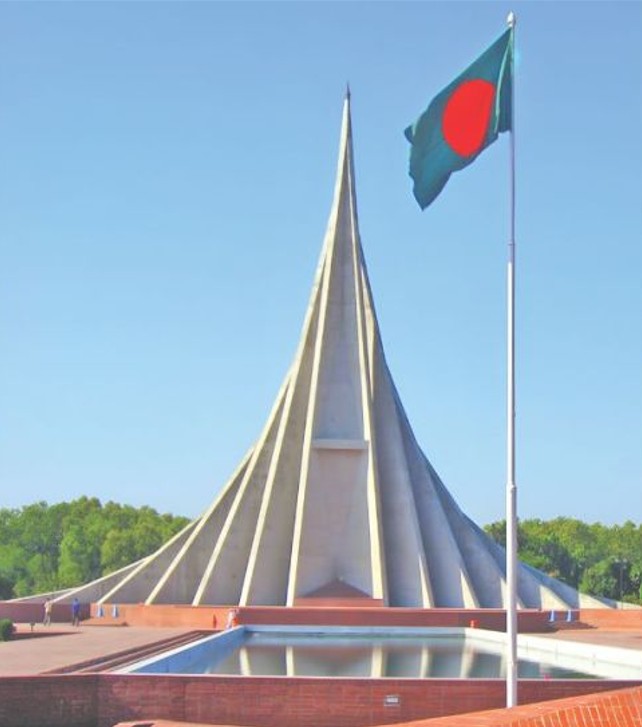
The nation will celebrate Victory Day today, commemorating its historic triumph over the Pakistani occupation forces, amid renewed hopes of restoring democracy through a free, fair and credible national election early next year.
Fifty-four years ago on this day, the flag of victory rose in the country’s newly liberated skies after nine months of a bloody war that claimed the lives of three million people and violated the honour of more than 300,000 women.
The victory confirmed the emergence of Bangladesh as a sovereign nation on the global map, ending more than two decades of oppressive Pakistani rule.
Bangladesh’s democratic journey since independence has been turbulent. The early post-independence years showed promise, but in 1975 democracy suffered a severe blow when Sheikh Mujibur Rahman abolished the multiparty system and introduced one-party rule. This was followed by his assassination, along with most members of his family.
From 1975 to 1990, the country remained under military or military-backed regimes, first under Lt Gen Ziaur Rahman and later Lt Gen Hussain Muhammad Ershad.
Although elections were held intermittently, political freedoms were curtailed, power remained highly centralised, and democratic institutions steadily weakened.
A mass uprising in 1990 forced Ershad to step down, paving the way for the restoration of parliamentary democracy in 1991, with Begum Khaleda Zia becoming the country’s first female prime minister.
The caretaker government system, introduced in 1996, helped facilitate relatively credible elections.
However, persistent political polarisation, street violence, election boycotts and weak accountability continued to undermine democratic consolidation.
In 2007, a military-backed caretaker administration again curtailed democratic rights while pursuing reform initiatives. In subsequent years, the Sheikh Hasina-led government abolished the caretaker system and oversaw elections widely criticised as one-sided, further shrinking political space and weakening constitutional institutions.
Prof Sabbir Ahmed of the Department of Political Science at Dhaka University believes Bangladesh has yet to reach its intended destination.
“Our greatest achievement is an independent Bangladesh,” he told the Daily Sun.
“But the nation has failed to uphold the philosophical commitments made in the Declaration of Independence – equality, human dignity and social justice. We are not united. That is why we move two steps forward and one step back, repeatedly making the same mistakes.”
Despite political setbacks, Bangladesh has made notable progress across several sectors since independence, benefiting from the ability to formulate independent policies and implement them through domestic resources and foreign assistance. The country has maintained steady economic growth, significantly reduced poverty through targeted social programmes, microfinance and rural development initiatives, built a globally competitive textile and readymade garment industry – now the world’s second-largest exporter – and made strides in the digital economy.
Life expectancy has risen to over 73 years, maternal and child mortality rates have fallen sharply, and vaccination coverage ranks among the highest in the region.
Universal primary education has largely been achieved, literacy rates are rising, and women’s participation in politics, the workforce and entrepreneurship has expanded.
Former Chittagong University economics professor Muinul Islam describes these developments as major achievements.
“Although democratic governance in Bangladesh has been repeatedly disrupted, the country has progressed far beyond Pakistan in economic terms,” he said.
“Bangladesh’s per capita GDP surpassed $2,820 in 2025, while Pakistan’s is projected to stand at just $1,707. This reality underscores how justified the Liberation War was and validates the people’s struggle for independence.”
Prof Sabbir Ahmed, however, emphasised that key challenges remain.
“We have failed to build an accountable system of governance or fully ensure the rule of law and sound economic management,” he said.
“Only a genuinely elected government can address these issues. We hope the new government formed after the February national polls will be transparent, accountable and committed to establishing the rule of law.”
He added that economic governance must be a priority, as people want assurance that their incomes can meet everyday living costs, noting that the nation now looks towards a smooth and meaningful transition to democracy.