Reporter Name
Law Adviser Prof Asif Nazrul has said that the current government has freed Bangladesh from India’s dominance and aggressive influence, enabling the country to speak in an independent voice.
“The aggressive role India played everywhere earlier made it impossible to speak freely. Now Bangladesh can speak independently,” he said, adding that while some criticism of the government is justified, much of it has crossed into excessive and unfair territory.
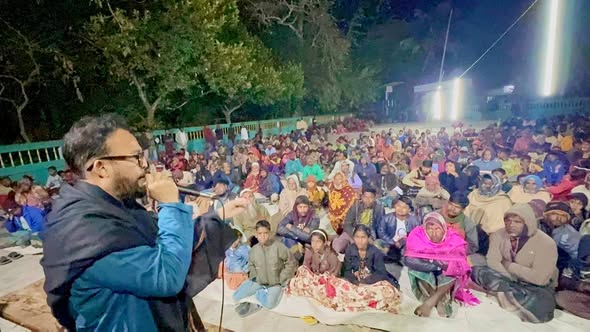
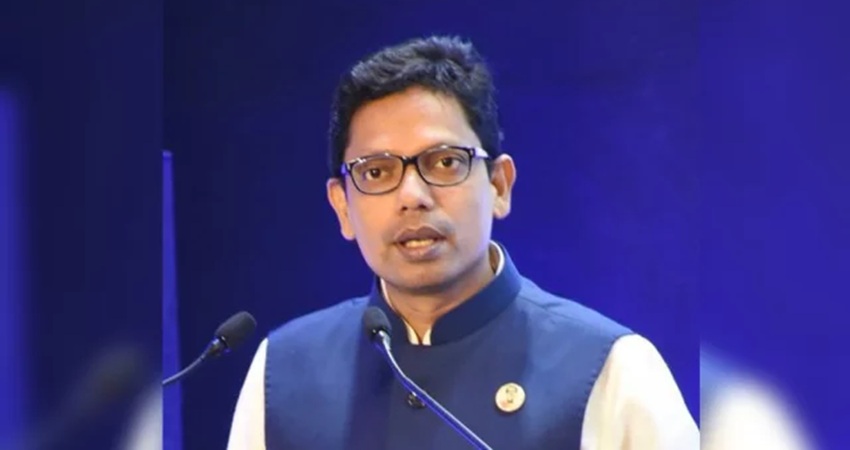
Asif Nazrul made the remarks on Saturday while speaking at a policy dialogue titled “Political Parties, Human Rights and Freedom of Expression,” organised by the Centre for Governance Studies (CGS) at the CIRDAP auditorium in Dhaka.
Referring to judicial reforms, he said that the authority over appointments, transfers, promotions, and budget allocations of the judiciary has now been vested in the higher judiciary.
“Is this not reform? In Bangladesh’s 54-year history, has such a major reform of a key state institution ever happened before?” he asked, adding that reforms do not produce results instantly but play a long-term role in establishing the rule of law and human rights.
He said the government formed a Commission on Enforced Disappearances, which has worked “extraordinarily well,” and based on its experience, a new Human Rights Commission law has been enacted.
“I can say with confidence that our law is better than any human rights law in South Asia,” he said, adding that appointments to the commission would be made soon.
Highlighting legal reforms, Asif Nazrul said long-overdue amendments to the Criminal Procedure Code (CrPC) and Civil Procedure Code (CPC) have been carried out during this period.
He also said the government Legal Aid Directorate has been made ten times more effective than before, prompting BRAC to invest Tk5.5 crore in renovating its offices.
The aim, he added, is to make the service twenty times more effective so that ordinary people can receive free legal assistance.
Addressing criticism over the Digital Security Act, he said the Cyber Security Act was drafted in consultation with the law’s strongest critics, with 90% of their demands accepted.
However, he stressed the need for “expectation management,” noting that meaningful change takes time.
On India’s influence, Asif Nazrul reiterated that under the leadership of Chief Adviser Prof Muhammad Yunus, Bangladesh can now speak independently on the international stage.
“Earlier, speaking out against India’s aggressive role was not possible. Isn’t this a national achievement?” he said.
He also pointed to economic and governance improvements, saying foreign exchange reserves have increased, inflation remains under control, discipline and confidence have been restored in the banking sector, and more than 20,000 allegedly politically motivated cases filed under the previous government—implicating nearly 500,000 opposition and dissenting individuals—have been withdrawn.
Responding to personal attacks, Asif Nazrul said he had been labeled a “Pakistani agent” for 15 years and is now being branded an “Indian agent.”
He dismissed claims that he owns a house in the United States, challenging journalists or YouTubers worldwide to produce proof. He described such allegations as cyberbullying against people who speak about integrity.
Addressing allegations that Awami League affiliates are receiving bail, he said around 90% of such bail orders are issued by the High Court. He noted that many judges were appointed during the authoritarian period and that any decisions regarding them fall under the jurisdiction of the Supreme Judicial Council led by the chief justice, not the law ministry.
On reports of advisers considering resignation, Asif Nazrul said at least three to four advisers had wanted to step down at different times over the past 16 months due to abusive attacks and death threats.
However, the chief adviser emphasised that reform is a collective effort and urged everyone to continue their work.
Concluding his remarks, Asif Nazrul called for self-reflection across society, including NGOs, media organisations, and political parties.
“Many talk about reform, but have we reformed ourselves—our thinking, integrity, and institutions?” he asked, expressing optimism that Bangladesh could reach a much better place within five to ten years if honesty and good intentions prevail.